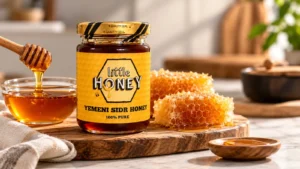
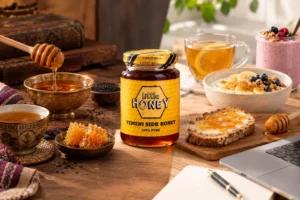
Yemeni Sidr Honey sits in a category of its own. It’s thicker, deeper in flavor, and noticeably more complex than the regular honey most people are used to. The first spoon usually tells the story. Instead of a quick, simple sweetness, you get something richer, almost earthy, with warm caramel tones and a lingering herbal finish. That’s why so many premium food buyers and wellness shoppers compare it directly with regular honey before upgrading.
At Little Honey Straws in Singapore, we focus on providing authentic, premium,m natural products, including genuine Yemeni Honey, to help customers choose quality they can trust. But the real question is not just “which tastes better?” It’s what actually makes Sidr Honey different from regular honey in origin, structure, nutrition, and everyday use. Let’s break it down in a practical, no-fluff way so you know exactly what you’re paying for.
What Makes Yemeni Sidr Honey Stand Out
The biggest reason Yemni Sidr Honey is so famous is its source: the Sidr tree. This tree grows in specific regions of Yemen and produces short seasonal blooms. Bees that feed on these blossoms create what is known as sidr tree honey, a rare form of monofloral honey (meaning it comes primarily from one floral source).
That single-source nectar is what gives it a distinct identity. Unlike regular honey, which is usually a mix of different flowers and plants, Yemni Sidr Honey is more focused on flavor and composition. It doesn’t taste “generic.” It has personality. People often describe it as:
- Deep and woody
- Slightly caramel-like
- Mildly herbal or spicy
- Long-lasting on the palate
And one more important detail: authentic Yemeni sidr honey varies slightly from batch to batch depending on the season. That variation is not a flaw; it’s a sign of natural harvesting, not industrial blending.
Origin and Harvest Differences
The difference between Sidr Honey and regular honey starts with where they come from. Sidr Honey is made by bees that mainly feed on Sidr tree blossoms in specific regions of Yemen. These trees bloom for a short time, so the honey is rare and limited in supply. Regular honey usually comes from many different flowers, so its source is mixed. This makes regular honey easier to produce in large amounts. Because of these differences in origin and harvesting, the two types of honey end up having very different qualities and flavors.
Regular Honey Production
Most commercial honey comes from large-scale beekeeping operations. Bees are placed in environments where they collect nectar from multiple flowers. This produces a blended honey profile. The result:
- Consistent taste
- Lighter aroma
- Easier mass production
- Lower cost
But that consistency comes at a price: less complexity.
Yemeni Sidr Honey Production
Now contrast that with Yemeni Honey. Here, bees primarily feed on sidr tree blossoms growing in remote, often rugged landscapes. These areas are not industrial farming zones. They’re natural ecosystems with limited flowering seasons. Harvesting is:
- Seasonal (sometimes just a few weeks)
- Labor-intensive
- Often done using traditional methods
- Highly dependent on environmental conditions
Beekeepers in Yemen often use small-scale, careful extraction techniques. Many batches are minimally filtered to preserve natural enzymes and aroma compounds. This is why Sidr tree honey feels closer to its natural state compared to heavily processed regular honey.
Flavor, Texture, and Aroma Breakdown
This is where most people instantly notice the difference.
Taste
- Yemeni Sidr Honey: Rich, bold, and layered. You don’t just taste sweetness—you taste depth. There’s a slow-building caramel warmth and earthy undertone.
- Regular Honey: Light, sweet, and straightforward. It delivers sugar-like sweetness without much complexity.
If regular honey is a quick note, Sidr honey is a full chord.
Texture
- Sidr honey is thick, dense, and slow to pour.
- Regular honey is lighter and spreads more easily.
That thickness comes from natural composition and low moisture content in high-quality monofloral honey.
Aroma
- Sidr honey carries subtle herbal and woody notes.
- Regular honey leans more floral but is less intense.
A simple test many buyers use: if the aroma lingers even after you close the jar, it’s likely high-quality Yemen honey.
Sidr Honey vs Regular Honey
This table gives a quick side-by-side look at how Sidr Honey differs from regular honey in key aspects like origin, taste, texture, processing, and price.
|
Feature
|
Sidr Honey |
Regular Honey |
| Source |
Sidr tree nectar |
Mixed flowers
|
|
Taste
|
Rich & complex |
Simple & sweet |
| Texture |
Thick |
Light
|
|
Processing
|
Raw/minimal |
Often filtered |
| Price |
High |
Affordable
|
Nutritional Profile Comparison
Both types of honey contain natural sugars like glucose and fructose, along with small amounts of enzymes, minerals, and antioxidants. But there are differences in density and variation.
Yemeni Sidr Honey
Often considered richer in:
- Antioxidants: These are natural compounds that help protect the body from damage caused by free radicals. In honey, they contribute to overall wellness support.
- Natural enzymes: These are active substances naturally found in raw honey that help with digestion and give honey some of its unique biological activity.
- Trace bioactive compounds: These are small but powerful natural elements that can have positive effects on the body, even in very tiny amounts, and they add to honey’s overall nutritional value.
Because it is usually closer to raw form, it retains more of its natural composition.
Regular Honey
Here’s a simple explanation of each line:
- Still nutritious: It still contains natural nutrients like sugars, enzymes, and small amounts of minerals, so it remains a healthy sweetener.
- More variable depending on processing: The nutrition and quality can change depending on how it is made or handled, so not all regular honey is the same.
- Sometimes filtered or pasteurized, reducing natural enzyme content: Some honey is heavily processed with heat or filtering, which can remove or reduce beneficial natural enzymes and other delicate compounds.
Raw Honey Factor
Here’s an important distinction: not all regular honey is raw. Many commercial brands heat or filter honey for clarity and shelf stability.
Meanwhile, authentic sidr tree honey is more commonly sold in a raw or minimally processed state, which helps preserve its natural structure.
Health Benefits of Yemeni Sidr Honey
Yemeni Sidr Honey is not just known for its rich taste but also for its potential wellness benefits. Because it is closer to raw and minimally processed honey, it retains more natural compounds compared to many commercial honey types.
1. Natural Energy Boost
It provides a quick and natural source of energy due to its natural sugars like glucose and fructose. Many people use it in the morning or before workouts for a clean energy lift.
2. Rich in Antioxidants
Sidr Honey contains antioxidants that help support the body in fighting oxidative stress caused by free radicals. This is one reason it is often considered a premium wellness food.
3. Supports Digestive Wellness
The natural enzymes present in raw sidr honey may help support smoother digestion and gut balance when consumed in moderation.
4. Soothing for Throat and Cough
Like other high-quality raw honeys, it is commonly used to soothe sore throats and calm cough symptoms naturally.
5. Better Than Processed Sweeteners
Compared to refined sugar and heavily processed sweeteners, it is a more natural alternative that also offers additional trace nutrients.
Top Yemeni Sidr Honey Benefits for Immunity in Singapore
Yemeni Sidr Honey Pricing Comparison
Yemeni Honey comes in different sizes and gift options. Prices vary based on weight, packaging, and product type, but all reflect its premium quality and limited production.
Pricing Table
| Product |
Weight / Type |
Price (USD) |
Best For |
| Yemni Sidr Honey Jar |
450g |
$63.00 – $148.00 |
Daily use / premium household |
| Yemni Sidr Honey Jar |
900g |
$116.00 – $221.00 |
Family use / long-term storage |
| Sidr Set Y |
Combo pack |
$95.00 |
Variety tasting/gifting |
| Yemni Sidr Honey Gift Box |
Mini jars set |
$4.00 |
Luxury gifting/samples |
| Yemni Sidr Honey & Black Seed Oil |
Combo product |
$60.00 – $68.00 |
Wellness users |
| Yemni Sidr Honey Mini Straws |
Single use |
$0.60 – $1.20 |
Travel / quick use |
| 30 Yemni Sidr Honey Minis |
Pack |
$30.00 |
Sampling/resale/convenience |
How to Identify Real Quality, Honey
Because premium honey is valuable, imitation and blending are common. Here’s how to recognize authentic quality:
1. Texture Check
Real Yemeni Honey is thick and slow-moving. It doesn’t behave like water-thinned syrup.
2. Taste Depth
If the honey tastes one-dimensional, just sweet, it’s likely blended regular honey.
3. Crystallization Behavior
All-natural honey crystallizes over time. If it never crystallizes at all, it may be overly processed.
4. Aroma Strength
High-quality monofloral honey has a strong, lasting scent.
5. Simple Finger Test
Rub a drop between your fingers:
- Real honey feels smooth and slightly sticky
- Fake or diluted honey feels watery or thin
But no single test is a perfect combination.
Everyday Uses in Food and Drinks
The way people use these two types of honey also differs.
Regular Honey Uses
- Sweetening tea or coffee
- Baking
- Cooking sauces
- Quick spreads
It’s practical and affordable for daily use.
Yemeni Sidr Honey Uses
This is where things get more intentional.
People often use it for:
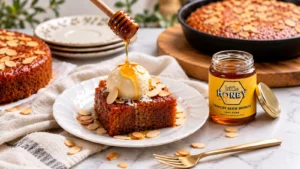
- Drizzling over yogurt or cheese
- Pairing with warm bread
- Consuming raw by the spoonful
- Mixing with warm (not hot) water
Because of its strong flavor, you don’t need much. A small amount goes a long way.
Important tip: Avoid high heat. Excess heat reduces the complexity of Sidr tree honey and flattens its natural aroma.
Storage and Shelf Behavior
Honey is naturally shelf-stable, but proper storage still matters.
Best Practices:
- Keep tightly sealed
- Store in a cool, dry place
- Avoid direct sunlight
- Use clean, dry utensils
Crystallization
Both Yemeni Sidr Honey and regular honey may crystallize over time. This is natural and not a sign of spoilage. To restore texture:
- Warm gently in water: Place the honey jar (or a spoonful in a container) in warm water so it slowly returns to a smooth, liquid form without damaging its natural properties.
- Avoid microwaving: Don’t heat honey in a microwave because high, uneven heat can destroy its natural enzymes, flavor, and quality.
One overlooked detail: sunlight exposure can slowly alter flavor compounds, especially in raw Yemen honey varieties.
Why Yemeni Sidr Honey Costs More Than Regular Honey
Yemni Sidr Honey is considered a premium product due to its rarity, limited production, and traditional harvesting methods. Regular honey, on the other hand, is widely produced and easily available, which keeps its price much lower.
| Type of Honey |
Average Price Range (per kg) |
Availability |
Reason for Price |
| Yemni Sidr Honey |
High (Premium Range) |
Rare / Limited |
Seasonal harvest, monofloral source, labor-intensive production |
| Regular Honey |
Low to Medium |
Widely available |
Mass production, mixed floral sources, and industrial processing |
Common Myths People Still Believe
Let’s clear up some confusion that often leads people to misunderstand honey quality and value.
Myth 1: Darker honey is always better
Not true. Honey color depends on the flowers bees collect nectar from, not its quality. Some light honeys are just as rich and nutritious as darker ones.
Myth 2: Crystallized honey is spoiled
False. Crystallization is a natural process that happens when honey’s glucose separates over time. It doesn’t mean the honey is bad or unsafe to eat.
Myth 3: All honey is the same
Completely wrong. Monofloral honey, like Sid,r comes from a single floral source, giving it a richer and more distinct flavor compared to blended regular honey.
Myth 4: Expensive honey is always fake-proof
Not necessarily. High price doesn’t guarantee authenticity. Some fake or blended products are also sold at premium prices, so sourcing and trust matter more.
Myth 5: Raw honey and processed honey are the same
They are different. Raw honey keeps more natural enzymes, antioxidants, and aroma compounds, while processed honey may lose some of these due to heating or filtering.
Conclusion
At the end of the day, the difference between Yemeni Honey and regular honey comes down to origin, purity, and depth of experience. If you want something simple, versatile, and budget-friendly, regular honey does the job perfectly well.
But if you’re looking for something richer, more complex, and tied to a rare natural source, Yemeni Sidr Honey stands apart. It’s not just a sweetener; it’s a sensory experience shaped by environment, season, and tradition. So the real decision is simple: do you want everyday sweetness, or do you want something that actually tells a story in every spoon?
For authentic, premium quality, you can contact Little Honey Straws in Singapore to buy genuine Yemeni Sidr Honey and other natural wellness products.
FAQ
1. What is Yemeni Sidr Honey?
Yemeni Sidr Honey is a rare type of monofloral honey made from bees that feed on sidr tree blossoms in Yemen. It is known for its rich taste, thick texture, and premium quality.
2. What makes Yemeni Sidr Honey different from regular honey?
Yemeni Sidr Honey comes from a single floral source (sidr tree), giving it a deeper, more complex flavor and stronger aroma compared to regular mixed-flower honey.
3. Is Yemeni Sidr Honey healthy?
Yes, Yemeni Sidr Honey is naturally rich in antioxidants, enzymes, and trace nutrients, making it a popular choice for wellness-focused consumers when used in moderation.
4. Can I use Yemeni Sidr Honey daily?
Yes, Yemeni Sidr Honey can be used daily in small amounts. Many people use it as a natural sweetener in drinks, breakfast foods, or for general wellness support.
5. Why is Yemeni Sidr Honey so expensive?
Yemeni Sidr Honey is expensive because it is produced in limited quantities, harvested seasonally from specific regions, and requires traditional, labor-intensive methods.