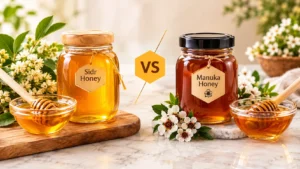
Honey before exercise gives your muscles a quick source of carbohydrate without the heaviness of a full meal. It’s simple, portable, and easy to fit into a busy training routine.
Runners, gym-goers, and weekend athletes may find it useful, especially before early-morning sessions, fasted workouts, or longer training days. No complicated routine needed. Grab a straw, get moving, and see how your body responds.
Why Honey Before Exercise Can Work
Your muscles rely heavily on stored glycogen during exercise. That supply gets used as you train, especially during longer or harder sessions. Carbohydrates from honey provide a readily available source of fuel before exercise.
Honey is mostly carbohydrate, with glucose and fructose making up much of its sugar content. Glucose can be used directly as a source of energy, while fructose is processed through a different pathway. When consumed together, these carbohydrates can support carbohydrate availability during exercise.
The Glucose-Fructose Combo
Honey naturally contains both glucose and fructose. That gives it a carbohydrate profile similar to other foods and sports products that combine multiple carbohydrate sources.
You don’t need a lab-formulated powder to get carbohydrates before training. A small serving of honey can do the job when it fits your workout and stomach.
Common Mistakes People Make
Even something this simple can be easy to overdo. A few mistakes come up often when people first try honey before training.
- Eating too much, too close to training, a large serving may cause stomach discomfort for some people
- Skipping water alongside it: honey provides carbohydrates, not hydration
- When choosing products with added ingredients, check the label if you want plain honey
- Expecting instant strength gains, honey provides fuel, but it isn’t a performance enhancer
- Using it as a meal replacement, honey is a carbohydrate source, not a balanced meal
The goal is simple: get some fuel without feeling overly full.
What the Research Says
Honey and exercise performance have been studied in human trials. A 2019 systematic review published in Nutrients examined nine human studies and found that honey generally produced exercise and biochemical responses comparable to other carbohydrate sources. That suggests honey can work as a carbohydrate fuel, rather than showing a dramatic advantage over other options.
Honey also contains naturally occurring antioxidant compounds. Their amounts can vary based on floral source and processing, so they shouldn’t be treated as a guaranteed exercise benefit. There’s a recovery angle too. After training, carbohydrates are stored as glycogen. Pairing carbohydrates with protein can support recovery, particularly after demanding sessions. Honey mixed into a protein shake or spread on toast with peanut butter is one simple way to combine both.
Carbs, Calories, and How Much to Take
A tablespoon of honey provides roughly 17 grams of carbohydrate and around 60 calories. The exact amount can vary by product and serving size. For a short, easy workout, you may not need extra carbohydrates beforehand. Your body already has stored glycogen from previous meals. Honey becomes more useful when you’re training fasted, exercising for longer, or doing a demanding session where extra carbohydrates may help.
Around 20 grams of honey is a practical starting point for many people. That’s close to a tablespoon, although weighing your serving gives you a more accurate amount. For workouts lasting longer than an hour, some athletes use additional carbohydrates during training. The right amount depends on workout duration, intensity, body size, diet, and individual tolerance.
Do You Need It Before Every Workout?
If you’ve eaten a normal meal before a light workout, you may already have enough fuel available. Adding honey on top of that isn’t automatically going to improve the session.
It can make more sense before longer cardio, fasted morning sessions, HIIT, or demanding workouts where quick carbohydrates fit your fueling plan. Think of honey as an option, not a daily requirement. Some workouts simply don’t need extra fuel.
How Much Honey Do You Need for Different Workouts?
Not every workout needs the same fueling strategy. What works before a long run may be unnecessary before a short lifting session.
Strength training: Weight sessions don’t always use carbohydrates as quickly as long endurance workouts. A small serving may be enough, and you may not need it at all if you’ve eaten recently.
Endurance running: Longer runs can use substantial amounts of stored carbohydrate. Honey can provide carbohydrates before running, while additional carbohydrates may be useful.l during longer sessions.
HIIT and sprint work: These sessions can be demanding even when they’re short. A small amount of carbohydrate before training may suit people who train fasted or haven’t eaten for several hours.
Swimming and cycling: Longer swimming and cycling sessions can benefit from asimilara.r approach. Start with your normal pre-workout meal or snack, then consider additional carbohydrates when training lasts longer.
Honey Before Exercise Compared With Other Pre-Workout Options
Let’s compare honey with some common options you might already have in your gym bag.
- Energy drinks: Energy drinks can provide caffeine and carbohydrates, depending on the product. Honey is simpler when you’re only looking for a carbohydrate source and don’t want caffeine.
- Bananas: Bananas provide carbohydrates along with fiber, potassium, and more food volume. Honey provides a concentrated source of carbohydrates in a smaller serving, which some people prefer before training.
- Pre-workout powders: Many pre-workout products focus on ingredients such as caffeine and beta-alanine. Honey doesn’t provide the same stimulant effect. Its main role here is carbohydrate fuel.
- Sports gels: Honey and sports gels serve overlapping purposes, but they’re not identical. Sports gels are designed specifically for exercise and often provide measured carbohydrate amounts in portable packaging. Honey offers a simpler food-based option.
A 2025 cycling study compared honey with a commercial sports product during three hours of cycling. The researchers found no major differences in carbohydrate use or gastrointestinal comfort between the tested products.
Taken together with the earlier research, the evidence supports honey as a useful carbohydrate source rather than a magic performance food. For shorter or casual sessions, honey can be a practical food-first option. During competitive endurance events, athletes may prefer gels or other products because their carbohydrate amounts and delivery are easier to measure.
When to Eat Honey Before a Workout
Timing depends on your workout, your previous meal, and how your stomach handles carbohydrates.
For a small serving, 15–30 minutes before training can be a practical starting point for some people.
- 15–30 minutes before training, try a small serving if you tolerate quick carbohydrates well
- Before a long run, combine your carbohydrate intake with adequate fluids
- During longer workouts, additional carbohydrates may help once training extends beyond an hour
- Before a fasted morning training, useful when you want some carbohydrates without eating a full meal
- Before high-intensity training may help if you haven’t eaten recently
Don’t test a new fueling routine for the first time before an important race. Try it during normal training and see how your stomach responds.
Can you eat honey on an Empty Stomach?
For many people, yes. A small amount of honey before exercise can be taken on an empty stomach if you tolerate it well. Start with a small serving and some water. If honey alone feels comfortable. Start by pairing it with a small piece of toast or another light carbohydrate source.
Your own tolerance matters. Some people can handle quick carbohydrates right before training, while others prefer more time between eating and exercise. Test your routine during regular workouts rather than on race day.
Ways to Take Honey Before Training
Straight honey works, but a few formats can make it easier to use.
- Straight from a honey straw: quick, portable, and convenient for rushed mornings
- Mixed with water, an easy way to combine carbohydrate intake with fluids
- Mixed with water and a small amount of salt, adds sodium alongside carbohydrates during longer sessions
- Spread on a small slice of toast; useful if you want something more substantial
- Added to a post-workout shake; combines carbohydrates with protein for recovery
There’s no single best method. Use the format that fits your workout and feels comfortable in your stomach.
Choosing the Right Honey for Training
If you’re buying honey for training, look for a product that fits your routine rather than chasing a special performance claim.
Things to check include:
- Plain honey with clear ingredient labeling
- Packaging that’s easy to carry
- A serving size that fits your carbohydrate needs
- Packaging that won’t leak inside your gym bag
- A flavor you actually enjoy
If you’re training in Singapore, Little Honey’s Sidr honey straws offer portable options for different routines.
| Product |
Best For |
Pack Type |
| Yemeni Sidr Honey Mini Straws |
Quick pre-workout fuel |
Individual straws |
| 30 Yemeni Sidr Honey Minis |
Regular training days |
Multi-pack |
| YSH 30 Honey Sachets |
Easy portion control |
Honey sachets |
| Sidr Set Y |
Keeping honey ready for frequent use |
Variety set |
Choose the pack size based on how often you train and how much honey you actually use.
A Note on Storage
Honey generally stores well at room temperature, so there’s no need to refrigerate it. For portable straws and sachets, keep them somewhere clean and dry. Avoid prolonged exposure to extreme heat, particularly if you’re leaving them in a hot car or gym bag.
Who Should Be Careful?
Honey before exercise isn’t right for everyone. People managing diabetes should account for honey as part of their carbohydrate intake and consider how it affects their blood glucose. Individual needs vary, so a healthcare professional or registered dietitian can provide personalized guidance. Children under 12 months should not consume honey because of the risk of infant botulism. Anyone with a known allergy to honey or bee-related products should avoid it.
For healthy adults, the main consideration is how honey fits into your overall carbohydrate and calorie intake. And remember: honey isn’t a hydration solution. It provides carbohydrates, but not enough fluid or electrolytes to replace what you lose through heavy sweating. That’s especially relevant when training in Singapore’s hot and humid conditions. If you’re using Little Honey’s Sidr honey straws in Singapore, pair your honey with appropriate fluid intake to stay hydrated during your workout.
Conclusion
So, should you eat honey before exercise? For many people, yes. It’s portable, easy to digest for some people, and provides carbohydrates that can be used as fuel before training. It’s not a performance enhancer, and it won’t replace a solid training plan or balanced diet. But before a fasted morning session, a longer run, or a demanding workout, a small serving can be a convenient way to add carbohydrates without eating a full meal.
The best approach is simple: start small, see how your body responds, and adjust based on the workout. Ready to try it? Shop Little Honey’s Sidr honey straws and keep a portable honey option within reach.
FAQs
1. Is honey good to eat before a workout?
Honey can be a useful pre-workout carbohydrate source, particularly when you want a small amount of fuel before training.
2. How long before exercise should I eat honey?
Around 15–30 minutes can be a practical starting point for a small serving, but timing depends on your meal history, workout, and personal tolerance.
3. How much honey should I take before a workout?
Around 20 grams is a reasonable starting point for many people. Your needs can vary based on workout duration, intensity, body size, and diet.
4. How many calories and carbs are in honey?
One tablespoon of honey contains roughly 60 calories and 17 grams of carbohydrate, although the exact values vary by product and serving size.
5. Is honey better than a banana before a workout?
Neither is automatically better. Honey is more concentrated, while bananas provide more volume and additional nutrients. Choose whichever fits your stomach and workout.