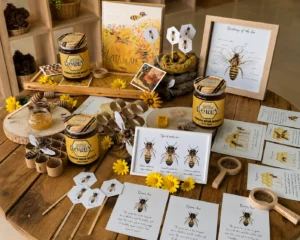
Honey Workshop Ideas for Kids are fun, hands-on activities that help children explore the world of honey through play and creativity. Kids can make a simple honey drink, learn what pure honey is, and build a honeycomb using craft materials like satay sticks. These interactive experiences are often more exciting than traditional classroom lessons because children can see, touch, taste, and create while learning. They also build teamwork, curiosity, problem-solving skills, and confidence in a fun and memorable way.
At Little Honey Straws, based in Singapore, we believe learning should be enjoyable and engaging for every child. Using quality honey in simple workshop activities gives parents, teachers, and event organizers an easy way to combine education with creativity. These ideas encourage children to discover nature, healthy food choices, and the amazing work of bees while having fun together.
What Is a Honey Workshop for Kids?
A Honey Workshop Ideas for Kids session is a fun, hands-on experience where children learn about honey, bees, and nature through simple activities. Instead of only reading or listening, kids take part in making a honey drink, exploring pure honey, creating honeycomb crafts, and discovering interesting facts about bees. These workshops are designed to make learning enjoyable and easy to understand, especially when using pure honey in Singapore.
Honey workshops are suitable for schools, families, homeschool groups, community centers, and children’s events. They encourage teamwork, creativity, and communication while helping kids remember what they learn through real experiences. Interactive learning keeps children engaged, builds confidence, and turns everyday lessons into exciting activities they look forward to, making it a great choice for families interested in honey in Singapore.
Why Kids Love Honey-Themed Activities
Honey-themed activities combine creativity, hands-on learning, and fun, making it easy for kids to stay engaged while discovering the fascinating world of bees and pure honey.
Learning Through Play
- Hands-on experiences: Kids learn by making honey drinks, tasting pure honey, and creating honeycomb crafts, making every activity fun and memorable.
- Exploring nature in a fun way: Children discover how bees make honey, why pollinators matter, and where honey comes from through interactive games and creative activities.
Building Confidence
- Working together: Kids build teamwork by sharing ideas, helping each other, and completing activities as a group.
- Asking questions: Workshops encourage children to stay curious and ask questions about bees, honey, and the natural world.
- Trying new things: Children gain confidence by tasting new flavors, making simple honey recipes, and creating fun honey-themed crafts.
Activity 1: Make a Simple Honey Drink
Ingredients You’ll Need
- Honey: The main ingredient that adds natural sweetness and delicious flavor to the drink.
- Water: Helps mix the honey smoothly and makes the drink refreshing.
- Lemon (optional): Adds a light citrus taste and a fresh twist to the honey drink.
- Ice keeps the drink cool and enjoyable, especially on warm days.
How Kids Can Make It Safely
- Easy step-by-step process: Kids can follow simple instructions to mix the ingredients and make a tasty honey drink with ease.
- Adult supervision: An adult should guide children during the activity to keep it safe, clean, and enjoyable.
What Children Learn
- Mixing ingredients: Children learn simple measuring and mixing skills while preparing their own honey drink.
- Natural sweetness: Kids discover how honey adds delicious sweetness without using refined sugar.
- Healthy drink choices: The activity encourages children to enjoy refreshing drinks made with simple, natural ingredients.
Activity 2: Learn How to Identify Pure Honey
Kids explore the color, smell, texture, and taste of honey to understand what makes pure honey special and different.
What Is Pure Honey?
Pure honey is natural honey made by bees from flower nectar without added sugar or artificial ingredients. It is a sweet, natural food that bees produce and store in honeycombs for their colony. Pure honey comes from bees that collect nectar from flowers and turn it into honey inside the hive.
Fun Observation Activities
- Color: Let kids observe how honey can range from light golden to dark amber depending on the flowers visited by bees.
- Smell: Encourage children to notice the natural floral aroma that makes each honey variety unique.
- Texture: Have kids feel how smooth, thick, or runny honey is and compare different consistencies.
- Taste: Allow children to enjoy a small sample and discover the natural sweetness and subtle flavors of pure honey.
Honey Facts Kids Enjoy
- Bees collect nectar: Bees visit flowers to gather nectar, which they carry back to the hive to make honey.
- Honeycombs: Bees build honeycombs from beeswax to store honey and raise their young.
- Different flower sources: The type of flowers bees visit can change the color, taste, and aroma of honey.
Activity 3: Build a Honeycomb with Satay Sticks
Kids create a simple honeycomb craft with satay sticks while learning about the unique structure of a bee’s hive.
Materials Needed
- Satay sticks: Use satay sticks to create the hexagon shapes that form the honeycomb.
- Glue: Glue helps hold the satay sticks together and keeps the craft sturdy.
- Yellow paper: Yellow paper can be added to decorate the honeycomb and make it look bright and colorful.
- Cardboard: Cardboard provides a strong base for attaching and displaying the finished honeycomb craft.
Easy Building Steps
- Create hexagon shapes: Arrange the satay sticks into hexagons to copy the shape of a real honeycomb.
- Connect pieces: Glue the hexagons together to build a larger honeycomb pattern.
- Decorate: Add yellow paper, drawings, or stickers to make the honeycomb colorful and fun.
What Kids Learn
- Shapes: Kids learn that honeycombs are made of repeating hexagon shapes that fit together perfectly.
- Teamwork: Working together on the craft helps children build communication and cooperation skills.
- Bee homes: Children discover that honeycombs are built by bees to store honey and raise their young.
Honey for Kids: The Natural Way to Keep Them Healthy
Safety Tips During Honey Workshops
A safe Honey Workshop Ideas for Kids session starts with adult supervision to guide children during every activity. Before the workshop begins, check if any child has a honey or bee-related allergy and keep the workspace clean and organized. Use child-friendly craft materials with no sharp edges, and make sure all tools are suitable for the children’s age group.
Good hygiene is just as important as creative learning. Encourage children to wash their hands before making or tasting a honey drink, keep craft supplies separate from food, and clean up after each activity. These simple steps help create a fun, safe, and enjoyable experience for everyone.
Tips for Organizing a Successful Honey Workshop
Before your Honey Workshop Ideas for Kids begins, gather all materials so every activity runs smoothly without unnecessary delays. Keep each session short and engaging to match children’s attention spans, encourage teamwork during crafts and games, and give kids plenty of opportunities to ask questions and share their ideas.
To make the experience even more memorable, send children home with a small keepsake such as a honey straw, a simple craft, or an activity sheet. These thoughtful touches help reinforce what they learned and give them something fun to remember after the workshop ends.
Why Families and Schools Enjoy Honey Workshops
Families and schools enjoy Honey Workshop Ideas for Kids because they combine education with hands-on fun. Children learn about bees, honey, and nature through creative activities that keep them interested while building teamwork, curiosity, and problem-solving skills in an enjoyable way.
These workshops are flexible enough to be held indoors or outdoors and can be adapted for different age groups. Whether it’s a school event, a family gathering, or a community program, honey workshops offer an engaging learning experience that children of all ages can enjoy.
Conclusion
Honey Workshop Ideas for Kids give children a fun way to learn through creativity, teamwork, and hands-on activities. From making a simple honey drink to exploring pure honey and building a honeycomb craft, every activity helps kids discover something new while enjoying the learning process. Parents, teachers, and community organizers can easily adapt these ideas for classrooms, family events, or special workshops.
If you’re planning a honey-themed activity, Little Honey Straws offers quality honey products that are perfect for educational workshops and family events. Contact us today to learn more about our honey workshops or to organize a fun and interactive session for your school, community group, or special event.
FAQs
- What age is best for a honey workshop?
Honey workshops are ideal for children aged 4 and above, with activities that can be adjusted to suit different age groups.
- Can children make honey drinks safely?
Yes. With adult supervision and simple ingredients, children can safely prepare and enjoy a refreshing honey drink.
- What materials are needed for a honeycomb craft?
You’ll need satay sticks, glue, yellow paper, cardboard, and a few basic craft supplies to create a simple honeycomb.
- How do honey workshops help children learn?
They encourage hands-on learning, creativity, teamwork, and curiosity while teaching children about bees, honey, and nature.
- Where can I buy quality honey for kids’ workshops?
You can find quality honey products at Little Honey Straws, making them a great choice for honey workshops, school activities, and family events.