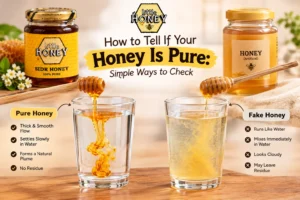
I’ll be honest, I used just to grab whatever honey jar looked nicest on the shelf. Cute label, reasonable price, done. Then a friend who works in food quality control told me most of the “pure honey” sitting in regular supermarkets isn’t really pure at all, and that’s when I first started learning how to spot fake honey myself. Now I flip every jar over before it goes in my cart.
Here’s the thing about honey: it all looks the same in the jar. Golden, thick, sweet. That’s about all you can tell just by looking. What’s actually sitting inside that jar could be real honey straight from the hive, or it could be mostly sugar syrup with a bit of honey mixed in to fake the flavor. Nobody’s born knowing the difference; somebody has to point it out to you, otherwise you’d walk right past it every single time.
So this is me passing on what I’ve learned. No lab kit needed, no fancy testing. Just seven things to check on the label before you buy.
Why Does Fake Honey Even Exist?
Turns out this isn’t some rare, niche problem; it’s actually one of the most commonly faked foods out there, right up there with olive oil. Food safety investigations in multiple countries (Australia’s had some pretty big scandals around this, actually) have caught major supermarket brands quietly cutting their honey with rice syrup, corn syrup, you name it. And some of these blends are made so carefully that even standard lab testing struggles to catch them.
Why go through all that trouble? Money, obviously. Bees take their sweet time (pun sort of intended) making real honey, and harvesting it properly isn’t cheap either. Syrup, on the other hand, costs almost nothing to produce. So blending the two lets companies sell more “honey” for less cost, while still charging you honey prices at checkout.
And it’s not just about feeling cheated out of a few dollars. Real honey brings enzymes, antioxidants, and antibacterial properties to the table, stuff that gets diluted or lost entirely once syrup gets mixed in. If you’re paying for honey, you’d probably like to actually get honey.
7 Label Clues to Spot Fake Honey
1. Read the Ingredients List First
This is the easiest one, honestly. A jar of pure honey should have exactly one ingredient listed: honey. That’s it. If you see corn syrup, added sugar, rice syrup, or some kind of flavoring tucked in there, just put it back. Real honey doesn’t need help from anything else.
2. Don’t Take “100% Pure” or “Raw” at Face Value
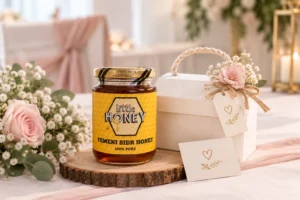
I know, these words sound reassuring; that’s kind of the point. But they’re not regulated the same way in every country, and some brands lean on them a little too heavily without much to back it up. “Raw” generally means it hasn’t been heated or processed much, and “100% pure” should mean nothing’s been added. If you really want to spot fake honey at this stage, it’s worth checking whether the brand actually explains their sourcing rather than just printing buzzwords on the label and hoping nobody asks questions. For example, at Little Honey in Singapore, we don’t just put a ‘raw’ label on our jars; we openly share the rigorous journey and sourcing of our Yemeni and Sidr honey, so you know exactly what you are eating.
3. Check Where the Honey Actually Comes From
This one matters more than people realize. Brands that are proud of their honey usually tell you exactly where it’s from: Yemeni Sidr honey, Kashmiri Sidr honey, whatever the case may be. This is why Little Honey in Singapore is fully transparent about harvesting our premium Sidr honey straight from the valleys of Yemen, ensuring you get the authentic regional taste and benefits. If a label says “packaged in [country]” without saying where the honey was harvested, that’s a little suspicious. Vague origin usually means there’s something they’d rather not specify.
4. Watch Out for Words Like “Honey Blend” or “Honey Product”
If you see “honey blend,” “honey syrup,” or “honey product” printed anywhere instead of just plain “honey,” treat that as a warning sign. Companies use these phrases specifically so they can legally sell a diluted mix without technically lying to you. Sneaky, but legal.
5. Look for Certification or Lab-Testing Seals
Some honey brands actually get their product tested and certified for purity, and they’ll usually put that seal somewhere visible. Not every real, honest producer has this, though, so don’t panic if it’s missing, but combine it with vague labeling elsewhere, and it’s one more reason to think twice.
6. Price Alone Can Tell You a Lot
Ever notice how sometimes a giant bottle of “pure” honey costs less than a tiny jar from a different brand? That should raise an eyebrow. Making real honey properly just isn’t cheap, and the price tends to reflect that. When something’s priced way too low for its size, it’s usually because it’s not what it claims to be.
7. Pay Attention to What the Label Says About Texture
Here’s something most people don’t know: real, raw honey crystallizes over time. It’s completely normal, and honestly it’s a good sign that you bought the real thing. Some transparent brands even mention this on the label so customers don’t freak out and think their honey went bad. Meanwhile, honey that stays weirdly liquid forever, even sitting at room temperature for months, has probably been processed or blended with something that stops it from crystallizing naturally.
Quick Checklist Before You Check Out
Run through these real quick, standing right there in the aisle if you have to:
- Only “honey” on the ingredients list, nothing hidden in there
- Clear info about where it was actually harvested
- No sneaky wording like “honey blend” or “honey product”
- Certification or lab testing mentioned somewhere, ideally
- Price feels reasonable for the size, not suspiciously cheap
- Label isn’t afraid to mention that crystallization is normal
- If checking labels at a busy supermarket feels like too much guesswork, the easiest shortcut is to buy directly from trusted, specialized sources. This is where Little Honey in Singapore comes in
Why Trusting the Right Brand Actually Matters
Once you know how to spot fake honey, you start noticing which brands are actually upfront about it and which ones are hiding behind vague marketing. At Little Honey straws in Singapore, our Sidr and Yemeni honey in Singapore stays raw and untouched- no syrup, no fillers, nothing buried in fine print. What’s written on the jar is genuinely what’s inside it.
Final Thoughts
You don’t need a chemistry degree to spot fake honey; you just need to actually read the label for once instead of trusting the pretty packaging. Check the ingredients, question vague terms, and don’t ignore what the price or texture is telling you. It takes maybe thirty seconds longer at the store, but it saves you from paying real honey prices for what’s basically flavored sugar water.
Curious about our raw Sidr or Yemeni honey? Drop by our Main Office at 807A Chai Chee Rd, Singapore 461807, send us an email at honeystrawsg@gmail.com, or give us a
call at +65 8651 2712; we’d love to help.
FAQs
- What ingredients should pure honey have?
Just one, honey. Nothing else. If syrup or added sugar shows up anywhere on the list, it’s not pure.
- Does crystallized honey mean it’s real?
Not a guarantee on its own, but it’s a strong, encouraging sign. Raw honey naturally crystallizes, while fake or heavily processed versions usually stay liquid no matter how long you keep them.
- Is cheap honey always fake?
Not always, but a suspiciously low price on a large bottle is one of the more common red flags, since real honey production just isn’t cheap to begin with.
- How can I test honey at home for purity?
Things like the water test or flame test might give you a rough clue, but honestly they’re not that reliable on their own. Sticking with clear labels and transparent brands is a much safer bet.
- Are honey certifications reliable?
They definitely add credibility when present, but plenty of genuine small producers don’t have them either. Their absence alone doesn’t mean it’s fake; just check the other clues too.
- Does “raw honey” always mean it’s unprocessed?
Usually, yes, though the term isn’t strictly regulated in every market. It’s worth checking if the brand actually explains how their honey in Singapore is sourced and handled, rather than just slapping “raw” on the label.