My grandmother never measured honey in bakery when she baked. She just poured until it “felt right,” and somehow her bread stayed soft for a week. I used to think that was just her being good at baking. It wasn’t. It was the honey doing quiet work in the background that sugar never could.
That’s basically the whole point of this article. Honey in bakery recipes isn’t some new food trend that showed up on Instagram last year. Bakers have leaned on it for centuries, mostly without knowing exactly why it worked so well. Now we know. And more people cooking with honey in Singapore are catching on to the same thing my grandmother figured out by accident decades ago.
Sugar sweetens. Full stop. That’s the extent of its job. Honey does more. Texture, shelf life, browning, even how forgiving your dough is while you’re kneading it, honey touches all of that. Ten reasons follow, some obvious, a couple that surprised me when I first learned them.
1. Moisture Just Doesn’t Escape as Easily
Honey is a humectant. Sounds technical, isn’t really. It just means honey grabs water molecules and holds them tight. Sugar can’t do that the same way. This single property is probably responsible for 80% of why honey in bakery use beats sugar on shelf life alone. Bread stays soft. Muffins stay soft. Cakes too.
2. Your Counter Won’t See Mould as Fast
Low water content plus a bit of natural acidity means bacteria and mould basically struggle to get a foothold in honey. Baked goods made with it resist staling on their own, no preservatives required. Anyone who’s lived through Singapore’s humidity knows how fast bread turns rubbery or worse. That’s exactly why a growing number of bakeries here have quietly swapped part of their sugar for honey in Singapore recipes. Nobody advertises it. They just do it because it works.
3. The Crumb Feels Different, Almost Silky
Bake two loaves side by side. One sugar, one honey. Pick them both up. You’ll feel it before you even taste anything. Honey in bakery changes how gluten develops while you’re kneading, which is the real reason buns and dinner rolls made with it come out lighter and softer to the touch.
4. Flavor That Actually Has Depth
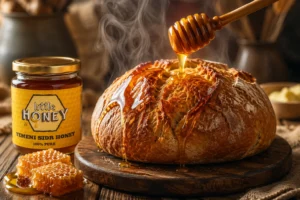
Sugar is one flat note. Honey has range. Floral. Earthy. Sometimes edging toward caramel depending on what you’re using. Little Honey in Singapore sells a Sidr honey that leans rich and smoky, a world away from a light wildflower honey you’d pick for a delicate sponge cake. Once you start swapping between varieties, plain white sugar starts tasting almost boring by comparison.
5. That Deep Golden Crust? Not Luck.
Honey caramelizes at a lower heat than sugar does. That’s the entire reason bread baked with honey browns more quickly and more evenly. If your loaves keep coming out pale no matter how long you leave them in, it’s usually the sugar’s fault, not your oven.
6. It Keeps the Yeast Happy Too
Most people miss this one entirely. In yeast-based bakes, honey isn’t just sitting there being sweet. It’s actually feeding the yeast, helping the dough rise properly, and balancing moisture at the same time. Talk to anyone who bakes with honey in bakery settings on a regular basis, and they’ll say the same thing: the dough just behaves better.
7. Fewer Gritty Bites
Sugar crystallizes sometimes, especially once a cake or cookie has been sitting around for a day or two. You end up with that faint gritty texture nobody wants. Honey is already liquid, so it blends in evenly and stays smooth. No crystals form later to ruin the bite.
8. A Natural Preservative, No Chemicals Involved
Acidity plus low moisture equals an environment bacteria and fungi don’t love. That’s honey in a nutshell as a preservative. If you’re trying to cut artificial preservatives out of what you bake, and a lot of people in Singapore are paying closer attention to ingredient labels these days, this is one of honey’s underrated strengths.
9. Genuinely Helpful for Gluten-Free Bakes
Gluten-free flours dry out faster than regular wheat flour. That’s just a fact of how they’re milled. Honey fills that gap, adding moisture and sweetness without piling on extra fat or sugar. If you’ve ever had a gluten-free loaf turn out crumbly and sad, honey is often the fix, and it’s a big reason honey in Singapore’s gluten-free baking scene has picked up real traction.
10. Swapping It In Isn’t Rocket Science
You don’t need to rebuild the recipe from scratch. Use roughly ¾ cup of honey for every 1 cup of sugar. Cut the other liquids back a touch. Drop the oven temperature by about 25°F, or 15°C if that’s how you measure things. That’s the whole trick.
A Few Things Worth Knowing Before You Start
Don’t switch everything at once. Try replacing 25 to 50 percent of the sugar first, see how the bake turns out, then go from there.
Lighter honey suits delicate bakes, sponge cakes especially. For anything denser, bread, hearty rolls, something like Sidr honey holds up far better.
Keep honey at room temperature. Use a dry spoon every single time. Moisture getting into your honey jar is basically the only thing that ruins it.
If you want honey in Singapore that’s actually pure, Little Honey Straws in Singapore carries both Yemeni and Kashmiri Sidr honey. It’s good enough to eat off a spoon, but it works just as hard folded into a recipe.
One Last Thing
Next time a recipe asks for sugar, try honey instead. It won’t taste identical, and that’s kind of the point. Texture, shelf life, flavor, all of it shifts in ways sugar simply can’t match. Home baker or café owner, it doesn’t matter. Honey in bakery recipes is one of those small swaps that ends up mattering a lot more than it looks like it should.
For any inquiries regarding our honey products or your order, please reach us at our Main Office, 807A Chai Chee Rd, Singapore 461807, or email us at honeystrawsg@gmail.com. You may also contact our Call Center at +65 8651 2712 for prompt assistance.
FAQs
- Can honey go into every baked item?
Pretty much, yes. Bread, cakes, muffins, cookies, and honey handle most of it fine. A few delicate things, meringues especially, or some gluten-free bakes, need a bit more care.
- What’s the actual honey-to-sugar ratio?
Roughly ¾ cup of honey for every 1 cup of sugar. Trim the other liquids slightly too, since honey brings moisture of its own.
- Which honey is best for baking?
Thick, rich honeys like Sidr suit denser bakes, bread, and fruit cake come to mind. Lighter honey in bakery fits delicate items better, think sponge cake or pastries.
- Does baking with honey mean things spoil faster?
No, actually, the opposite happens. Honey’s natural antibacterial qualities usually keep baked goods fresh longer than sugar-only versions do.
- Will my baked goods taste different with honey?
Yes, and most people find it an upgrade. Depending on the variety, expect floral, earthy, or slightly smoky notes that sugar simply doesn’t bring to the table.