Long before antibiotics or sterile bandages existed, healers were already reaching for honey to treat cuts, burns, and infections. Egyptian medical texts from thousands of years ago describe honey for wound healing as a go-to remedy, and you’ll find similar practices scattered across Greek, Roman, and traditional Chinese medicine too.
What’s genuinely interesting is that modern science has actually caught up with this old wisdom – clinical research now backs up honey’s real, measurable healing properties. So is honey for wound healing just an old folk tale, or is there actual substance behind it? Turns out, quite a lot – and if you’ve been browsing honey in Singapore lately, you’ve probably noticed this old remedy is having a real moment.
A Brief History of Honey as a Healing Remedy
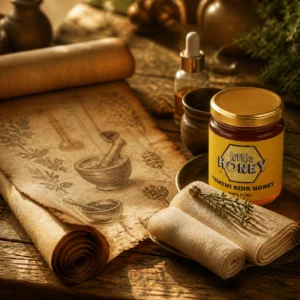
Using honey to treat wounds isn’t some new wellness fad – it’s one of the oldest documented medical practices we know of. Ancient Egyptian physicians applied honey straight onto wounds and burns, often mixing it with other natural ingredients to make early antiseptic dressings. Hippocrates, the Greek physician often called the father of modern medicine, wrote about honey’s healing properties too.
For a long stretch, this practice took a backseat once pharmaceutical antibiotics came along. But antibiotic resistance, along with a renewed interest in natural, evidence-based remedies, has brought honey for wound healing right back into modern clinical settings – this time with peer-reviewed research behind it rather than just tradition.
The Science: Why Honey Works for Wound Healing
So what’s actually going on here? A few distinct properties work together:
- Antibacterial action. Honey has low water content and a high sugar concentration, which pulls moisture out of bacteria and stops them from growing. A lot of honey types also produce small amounts of hydrogen peroxide as a natural byproduct, giving it a mild antiseptic effect.
- Acidity. Honey’s naturally low pH creates conditions that many wound-infecting bacteria simply can’t thrive in.
- Anti-inflammatory effects. Compounds found in honey help calm swelling and inflammation around a wound, which can ease pain and support faster tissue repair.
- A moist healing environment. Contrary to the old idea that wounds heal best when kept dry, research actually shows a moist environment speeds up healing and reduces scarring. Honey helps maintain that naturally.
- Natural debridement. Honey helps draw dead tissue and debris away from a wound, supporting the body’s own cleanup process without harsh chemicals.
- Put all of that together, and it’s easy to see why honey for wound healing has held up so well under modern scientific scrutiny.
Types of Honey Used in Wound Care
Not all honey sitting in your kitchen cupboard is fit for wound treatment. There’s a real difference between everyday table honey and medical-grade honey used clinically.
Medical-grade honey (like Medihoney) is sterilized through irradiation to eliminate bacterial spores, standardized for potency, and made under strict quality controls specifically for wound care.
Raw or table honey, on the other hand, isn’t sterilized and can carry bacterial spores or contaminants that make it unsuitable – and potentially risky- for open wound treatment, especially on serious or chronic wounds.
What Does Honey Help With?
Clinical studies have looked at honey’s effectiveness across several wound types:
-
- Minor cuts and scrapes: honey can support faster healing and lower infection risk in small, superficial wounds
- Burns – several studies suggest honey dressings may speed up healing time and reduce scarring in minor to moderate burns compared to some conventional dressings
- Diabetic ulcers and chronic wounds: honey-based dressings show up in some clinical settings to manage slow-healing wounds, particularly when standard treatments haven’t worked well
- Post-surgical wound care: under medical supervision, honey dressings are sometimes used to support healing after certain procedures
- Skin irritation: is another area where honey’s soothing, anti-inflammatory properties come in handy; for more on this, check out our guide on Honey for Eczema.
How Honey Is Used in Modern Wound Care
In clinical practice, honey is rarely applied straight from a jar. It’s typically built into honey-impregnated dressings – sterile gauze or pads infused with medical-grade honey – which get changed regularly by healthcare providers to keep the healing environment clean and effective.
For minor, superficial wounds at home, some people use small amounts of certified medical-grade honey as a topical application, covered with a clean dressing. That said, using honey for wound healing at home should really be limited to minor injuries, and even then, ideally with a product specifically labeled for medical use – not honey pulled straight from the pantry.
Precautions & When Honey Isn’t Appropriate
While the evidence behind honey for wound healing is genuinely encouraging, it isn’t a stand-in for professional medical care in every situation. Keep these precautions in mind:
- Never apply raw, unsterilized honey to open wounds – it can introduce bacteria or spores rather than fight them off
- Deep wounds, puncture wounds, or wounds showing signs of infection (redness, swelling, pus, fever) need prompt medical attention, not home remedies
- People with diabetes or weakened immune systems should check with a healthcare provider before using honey on any wound
- Honey in Singapore should never replace prescribed treatment for chronic or non-healing wounds – it can complement medical care, not substitute for it
Quick Reference
Not sure which category your wound falls into? Here’s a simple breakdown to help you decide whether honey could be a helpful addition to your care routine.
Keep in mind this is general guidance only; when in doubt, always check with a healthcare provider first.
| Wound Type |
Suitability of Honey |
| Minor cuts & scrapes |
Generally suitable (medical-grade preferred) |
| Minor to moderate burns |
Supported by some clinical evidence |
| Chronic/diabetic ulcers |
Used in clinical settings under supervision |
| Deep, infected, or puncture wounds |
Not appropriate; seek medical care |
As you can see, honey works best as a supportive option for minor to moderate wounds, not a replacement for medical treatment in serious cases.
If your wound falls into the “not appropriate” category, don’t wait; seek professional medical care right away.
Conclusion
Honey for wound healing isn’t just an old wives’ tale passed down through generations – it’s a remedy that modern science has genuinely backed up. From its antibacterial and anti-inflammatory properties to its ability to support a moist, healing-friendly environment, honey has earned its spot in both traditional and modern wound care. That said, not all honey is created equal, and using it safely means understanding the difference between raw honey and medical-grade products. For minor scrapes, it might be a handy addition to your first-aid kit – but for anything more serious, always check with a healthcare provider before treatment.
This article is for general educational purposes and isn’t a substitute for professional medical advice. Always consult a healthcare provider for guidance on wound care, especially for deep, infected, or chronic wounds.
For questions about our products, Little Honey Straws Singapore is happy to help – email us at honeystrawsg@gmail.com or call our Call Center at +65 86512712.
Frequently Asked Questions
1. Can I use any honey on a wound, or does it need to be medical-grade?
For anything beyond the most minor scrapes, medical-grade honey is strongly recommended. Raw or table honey isn’t sterilized and can carry bacteria that’s simply not suitable for open wounds.
2. Is honey safe for burns?
Some clinical research supports using medical-grade honey dressings on minor to moderate burns. That said, larger or severe burns need professional medical treatment.
3. How often should honey dressings be changed?
This depends on the wound and the specific product being used, but honey dressings in clinical settings are typically changed every 1-3 days.
4. Can honey cause an infection if used wrong?
Yes. Using non-sterile, raw honey on an open wound, instead of medical-grade honey, can actually introduce bacteria and raise infection risk rather than prevent it.
5. Is the honey in Singapore stores suitable for wound care?
Most honey sold in Singapore, including well-loved local brands like Little Honey Straws Singapore, is intended for culinary and wellness use rather than clinical wound treatment.