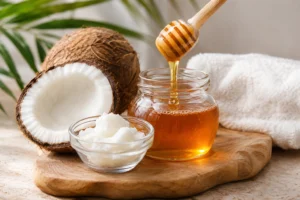

Honey and coconut oil are two of the most familiar ingredients in a Singapore kitchen, and lately they’ve turned up in hair masks, face masks, and lip scrubs all over social media. It’s easy to see why. Our weather is humid outside but dry inside, because air-conditioning pulls moisture from skin and hair. A simple, natural way to bring some of it back is appealing.
But the question that matters is whether this pairing really does anything useful, or whether the claims are just good marketing. In this guide, we’ll look at what each ingredient does, what the evidence says, easy recipes for hair, skin and lips, and who should skip them.
At Little Honey, we’re often asked about using honey beyond the kitchen. So we’ll also cover how to choose a good jar if you’re buying raw honey in Singapore.
The two ingredients do different jobs, which is why they get paired so often.
Honey is a natural humectant, which means it attracts moisture and helps hold it close to your skin or hair. Coconut oil is an emollient. It coats the surface, softens it, and helps stop that moisture from escaping. One draws water in and the other seals it, so together they make a simple, well-rounded conditioning mix.
| Comparison | Honey | Coconut oil |
| Main job | Attracts moisture | Seals and softens |
| Texture | Sticky, thick | Solid when cool, melts on contact |
| Feels like | Light and tacky | Rich and slippery |
| Rinses off | Easily with water | Needs shampoo or a cleanser |
That last row is worth remembering. Honey washes away easily, while coconut oil doesn’t, and it’s the reason most mistakes with these masks happen at the rinsing stage.
This is the part many recipe posts skip. Here’s what we can say honestly.
For hair, a frequently cited lab study found that coconut oil reduced protein loss in hair compared with mineral oil and sunflower oil. The likely reason is that coconut oil can penetrate the hair shaft instead of just sitting on top. For skin, small studies on virgin coconut oil have looked at dry skin and found it works as a moisturiser. Honey has a long record in wound care and is well known as a moisturising, soothing ingredient.
There’s no solid clinical research on honey and coconut oil used together as a hair or skin treatment. Most of what you read online comes from personal experience, which can be genuinely helpful but isn’t proof. There’s also no good evidence that either ingredient makes hair grow faster. The honest summary is that these are pleasant, low-risk ways to hydrate and soften, not treatments for hair loss or skin conditions.
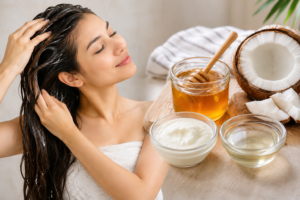
If your hair feels dry, rough, or frizzy, a mask is the easiest place to start. These three cover most needs, and each one takes only a few minutes to prepare.
Mix 1 tablespoon of raw honey with 2 tablespoons of virgin coconut oil, and warm the mixture gently until it’s runny. It should feel comfortably warm on your wrist, never hot. Apply it from the mid-lengths to the ends, then wrap your hair in a shower cap for 20 to 30 minutes. Rinse with lukewarm water, then shampoo twice to remove the oil.
For extra softness, whisk 2 tablespoons of plain yogurt with 1 tablespoon of honey and 1 teaspoon of melted coconut oil. The yogurt makes the mask lighter and easier to rinse. Apply it to damp hair, leave it for 20 minutes, and shampoo as usual.
If your scalp feels tight or dry, massage a small amount of the basic mask into your scalp using your fingertips and leave it for 15 minutes. Keep the amount small, because too much oil on the scalp can leave it feeling greasy. If you have persistent flakes, itching, or redness, see a doctor, because those can be signs of a scalp condition that no home mask will fix.
For hair, 20 to 30 minutes once a week is plenty. For skin, 10 to 15 minutes once or twice a week is enough. Longer isn’t better, and frequent use can leave hair weighed down or skin congested.
You may have seen advice to leave a hair mask on overnight. Most people don’t need to. It makes a mess of pillowcases, and leaving oil on your scalp for hours can lead to buildup. A mask left on for half an hour does most of the work.
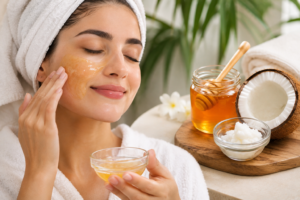
For skin, the same idea works on a smaller scale. Use less, and always patch test first.
After cleansing, mix 1 teaspoon of raw honey with 1 teaspoon of virgin coconut oil. Apply a thin layer to your face, avoiding the eyes, and leave it for 10 to 15 minutes. Rinse with lukewarm water and follow with a gentle cleanser to remove any oil left behind. This suits dry or normal skin best.
For rough hands, elbows, or knees, mix 1 tablespoon of each and rub it into the dry area for a minute. Leave it for 10 minutes and rinse. It’s a simple weekly treat for the parts of your body that dry out first.
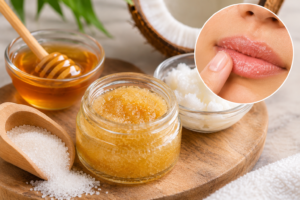
Dry, flaky lips are one of the easiest things to help at home, and this scrub takes about a minute to make.
Ingredients:
Directions:
Tip: Use it once or twice a week at most. Skip it if your lips are cracked or bleeding, because scrubbing can make that worse.
This is the most important caution in the article. Coconut oil is rich, and for some people it can clog pores, especially on the face. If your skin is oily or prone to breakouts, a mask with coconut oil may do more harm than good.
For these skin types, a honey-only mask is usually the better choice. If you’re interested in that route, our guide to honey for acne explains what research does and doesn’t show. For a lighter alternative, our honey and oatmeal face mask recipes avoid heavy oils altogether.
A few small habits can make the difference between a pleasant mask and a greasy mess.
These masks are low risk for most people, but a few groups should be careful.
For a patch test, dab a small amount on your inner wrist or jawline, wait 24 hours, and look for redness, itching, or swelling before using it more widely.
Quality matters in a two-ingredient recipe, because a weak ingredient has nowhere to hide. For coconut oil, choose virgin, cold-pressed oil rather than a refined one. It keeps more of its natural character, and most DIY recipes are written around it. For honey, choose raw, minimally processed honey, since heavy heating and filtering can reduce some of its natural compounds.
Here are the honeys we’d pick for these recipes:
Honey and coconut oil make a simple, pleasant pair for dry hair, dry skin and dry lips. The ingredients are easy to find, quick to mix, and gentle for most people. Honey draws moisture in, and coconut oil helps hold it there, which is a sensible combination for our humid-outside, air-conditioned-inside climate.
It’s worth keeping your expectations realistic, though. This isn’t a treatment for hair loss or skin conditions, and research on using the two together is still limited. Think of it as a small self-care habit that sits alongside the basics: gentle cleansing, daily sun protection, and professional advice when something needs more than a home remedy.
If you’d like to try pure Sidr honey in your own recipes, Little Honey delivers raw honey in Singapore. Contact us or call +65 8651 2712, and we’ll be happy to help you choose the right jar.


Conversion Rule: 10 Points = $1.00
Conversion Rule: 10 Points = $1.00
Conversion Rule: 10 Points = $1.00
Conversion Rule: 10 Points = $1.00