Not all honey tastes the same, and the flowers behind it make a bigger difference than you might think. Some varieties have a rich, distinctive flavour linked to a particular flower, while others offer a naturally blended taste from several different blooms. Understanding monofloral vs. multifloral honey helps explain why these differences exist and what makes each variety unique.
The main difference lies in the source of the nectar. Monofloral honey comes predominantly from one type of flower, whereas multifloral honey combines nectar from multiple floral sources. From flavour and aroma to price, availability, and everyday use, each has something different to offer. So, which one should you choose? Let’s explore their differences to help you find the right honey for your taste and needs.
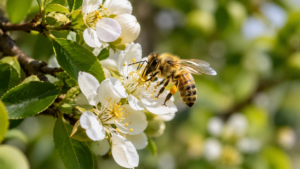
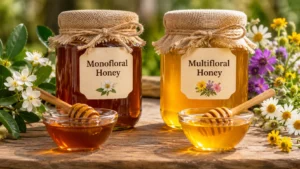
“Mono” means one. Monofloral honey is honey that comes mostly from a single type of flower, such as Sidr, manuka, acacia, or lavender.
Bees fly freely, so no honey is ever 100% from one flower. The word “monofloral” really means “predominantly one flower.” Beekeepers place their hives near large areas of one blooming plant, so most of the nectar the bees collect comes from that plant. In some countries, labs confirm this by checking the pollen in the honey.
Because it depends on one flower, monofloral honey usually has a clear, recognisable taste, aroma and colour. A bold, thick honey and a light, mild honey can both be monofloral. The flavour simply follows the flower.
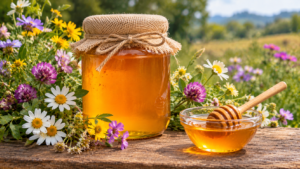
“Multi” means many. Multifloral honey is made from the nectar of several different flowers, trees and plants that were blooming near the hive at the same time. You will also see it called wildflower honey or polyfloral honey.
Since the mix changes with the season and the place, the taste is usually more balanced and mellow. It can also vary slightly from one harvest to another. That is completely normal, and it is part of its charm.
Here is a side-by-side look at the main differences:
| Feature | Monofloral Honey | Multifloral Honey |
| Flower source | Mostly one flower | Many flowers |
| Taste | Distinct and easy to recognise | Mild, rounded, blended |
| Aroma | Clearly linked to the flower | Softer, mixed |
| Colour and texture | Depends on the flower (light to dark, thin to thick) | Varies by season and region |
| Price | Usually higher | Usually more affordable |
| Availability | Limited by bloom season | Easier to find |
| Batch consistency | More consistent within a type | Can change from harvest to harvest |
| Best for | Special taste, gifting, a particular honey you love | Everyday sweetening, cooking, baking |
Why does monofloral honey usually cost more? Many monofloral flowers bloom for only a few weeks each year, and some grow in remote, hard-to-reach areas. That means smaller harvests and more effort to produce them. Multifloral honey comes from a wider range of flowers over a longer period, so it is easier to produce in larger amounts.
Both types are mainly natural sugars (fructose and glucose) with water and small amounts of enzymes, minerals, and plant compounds such as antioxidants. Honey is still a sugar, so it is best enjoyed in moderation.
What changes is the floral source. The plant compounds in honey depend on the flowers the bees visited, so the levels can differ from one honey to another. Darker honeys generally tend to carry more of these compounds than lighter ones, but this is not a fixed rule.
This means you cannot say that monofloral is “healthier” than multifloral, or the other way around. Each honey has its own profile. Honey has also been used traditionally in many cultures, but it is not a cure for any condition. If you have diabetes or any health concern, check with your doctor before adding honey to your daily routine. Honey should never be given to babies under 12 months.
Yes, Sidr honey is a well-known example of monofloral honey. It is made by bees that collect nectar mainly from the flowers of the Sidr tree (Ziziphus spina-christi), also called the Lote tree or jujube.
The origin changes the taste:
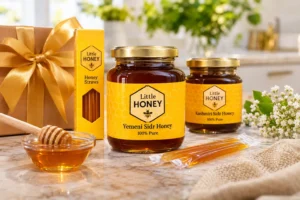
At Little Honey, both varieties are available in jars, along with honey minis for tea and travel. If you would like to see how Sidr compares with other honeys in more detail, read how Sidr honey compares with other honey varieties.
When choosing between monofloral and multifloral honey, the best answer depends on how you plan to use it.
A mild honey works best here. Multifloral honey is a practical, affordable choice. If you want a monofloral option, a light Kashmiri Sidr is a good match for tea, warm water, yoghurt or toast.
Monofloral honey makes a more memorable gift because it has a clear origin and a distinct taste. A Yemeni Sidr jar or a honey gift set feels special and personal.
If you enjoy a deeper, more characterful flavour, go for monofloral. Try it on its own with a spoon so you can taste the difference.
Heat softens the delicate flavours in honey. A multifloral honey is usually enough for baking, marinades, and sauces, and it saves your premium jar for eating fresh.
A few quick checks can help you buy with confidence:
Knowing these basics makes the monofloral vs. multifloral honey choice much easier, because you can read the label and know what is inside. For more on spotting the real thing, see this guide on which Sidr honey is the best in the world.
Looking for pure Sidr honey in Singapore? Little Honey offers Yemeni and Kashmiri Sidr honey in jars, plus single-serve honey straws that are easy to carry. If you are searching for honey straws in Singapore, this is the range to start with.
Popular options and prices
Delivery
Visit or contact us
Not sure which jar to pick? Message the team on WhatsApp, and they will help you choose.
Monofloral honey comes mostly from the nectar of one type of flower, while multifloral honey comes from many different flowers. This changes the taste, aroma, colour, and price.
Not always. Monofloral honey has a more distinct flavour and often costs more, while multifloral honey is milder and more affordable. The better choice depends on how you want to use it.
Yes, in most cases. Wildflower, polyfloral, and multifloral honey all describe honey made from the nectar of many different flowers.
Many monofloral flowers bloom for a short time and grow in remote areas, so harvests are smaller and harder to produce.
Yes. Sidr honey is made mainly from the nectar of Sidr tree flowers, which is why it is considered a monofloral honey.
A mild honey is usually best. Multifloral honey or a light Kashmiri Sidr both work well for tea, breakfast, and everyday sweetening.


Conversion Rule: 10 Points = $1.00
Conversion Rule: 10 Points = $1.00
Conversion Rule: 10 Points = $1.00
Conversion Rule: 10 Points = $1.00