Honey in cooking is one of those things people do without thinking twice: a drizzle here, a spoonful there, straight into whatever’s on the stove. But if you’re using honey for more than just sweetness, the way you cook with it actually matters. Heat changes honey, and depending on how you use it, you either keep its natural goodness intact or cook most of it away.
If you’ve ever wondered whether baking with honey undoes all its benefits, or whether there’s a smarter way to use it in your kitchen, this one’s worth reading before your next recipe. At Little Honey Straws in Singapore, we work with raw Sidr honey daily, so this is a question we think about often too.
Why Honey in Cooking Behaves Differently Than Sugar
Sugar is simple: it dissolves, it sweetens, that’s about it. Honey is a lot more complex. It carries natural enzymes, antioxidants, and trace nutrients that sugar simply doesn’t have. That complexity is exactly why honey in cooking needs a bit more thought than just swapping it in for sugar at a one-to-one ratio.
Organic honey and 100% pure honey, in particular, carry more of these natural compounds than blended or heavily processed versions. So how you cook with it can either preserve that value or quietly cook it away.
It’s worth being clear on what these terms actually mean, since they’re not interchangeable. Raw refers to how the honey was processed, minimally heated or filtered. Pure refers to what’s actually in the jar, honey with nothing else added or diluted in. Organic refers to how it was produced, meeting specific farming and certification standards. Honey can be one, two, or all three of these at once, but they’re separate qualities, and it’s the “raw” part specifically that determines how well it holds up to cooking.
What Happens to Honey When You Heat It
Heat is generally understood to be a key factor in how honey’s nutritional profile changes during cooking. The higher the temperature and the longer the exposure, the more likely it is that natural enzymes and antioxidants are reduced, based on how heat is known to affect these kinds of organic compounds.
Enzymes Start Breaking Down Early
Honey’s natural enzymes, like invertase and diastase, begin to degrade at moderate heat. These are part of what makes raw honey easier to digest and more active nutritionally.
Antioxidants Reduce With Prolonged Heat
Flavonoids and phenolic compounds, honey’s natural antioxidants, gradually decrease the longer honey sits at high temperatures, which is part of why baked goods made with honey don’t carry the same benefits as honey eaten raw.
Flavor Changes Too
Beyond nutrients, heat also changes how honey tastes. Extended cooking can make honey taste more like caramelized sugar than the complex, floral notes you get from raw, pure Sidr honey straight from the jar.
Best Temperature for Honey: What to Avoid
There’s no single number every recipe follows, but general guidance is helpful here.
| Temperature Range |
General Effect |
Enzyme Activity |
Typical Use |
| Below 100°F / 38°C |
Generally minimal impact |
Tends to stay active |
Cold recipes, drizzling, raw eating |
| 100–140°F / 38–60°C |
Some enzyme reduction may begin |
Mostly active |
Warm tea, gentle stovetop mixing |
| 140–200°F / 60–93°C |
Noticeable reduction likely |
Reduced |
Sauces, glazes, quick cooking |
| Above 200°F / 93°C |
Significant reduction expected |
Largely reduced |
Baking, roasting, flavor-focused use |
These ranges are general guidelines based on how heat is understood to affect organic compounds like enzymes, not exact scientific cutoffs. The actual impact depends on exposure time, honey type, and other variables, so treat this as a rough guide rather than a strict rule.
If you’re baking at typical oven temperatures, usually 350°F and above, you’re well past the point where honey’s natural enzymes survive. That doesn’t make the honey unsafe; it just means you’re using it for flavor at that point, not for its raw nutritional properties.
Smart Ways to Cook With Honey
If you want to get the most out of using honey in cooking, a few adjustments go a long way.
- Add honey after cooking, once the food has cooled slightly, rather than baking it in from the start
- Use honey in no-bake recipes where it never needs to hit high heat
- Stir it into warm, not boiling, liquids like tea or oatmeal
- Save raw honey for finishing touches, drizzled over a dish right before serving
- Reserve heavily heated cooking for recipes where flavor matters more than nutrient retention
Cooking With Honey vs Using It as a Topping
There’s a real difference between honey used as an ingredient inside a recipe and honey used as a finishing touch on top of one. Cooking honey into a dish means it goes through whatever heat that dish requires, often losing a good portion of its natural properties along the way. Using it as a topping, drizzled on after the cooking is done, keeps it mostly intact.
If nutrition is your priority, lean toward using honey as a topping more often than as a baked-in ingredient. If flavor and texture in the final dish matter more, cooking honey in is perfectly fine; just don’t expect the same nutritional payoff.
Recipes Where Raw Honey Works Best
Some dishes are naturally suited to preserving honey’s natural qualities, since they don’t require high heat at all.
- Overnight oats with a drizzle of raw honey stirred in cold
- Yoghurt parfaits layered with pure honey and fresh fruit
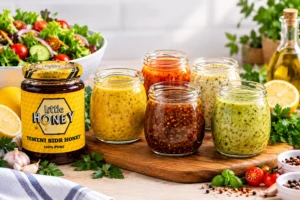
- Salad dressings whisked together with honey, oil, and vinegar
- Smoothies blended with a spoonful of honey added at the end
- Honey drizzled warm tea or lukewarm herbal infusions
These are the situations where organic honey and 100% pure honey actually get to do what they’re capable of, rather than being cooked down into something closer to caramel.
Honey Grilling Recipes for Summer: Easy and Delicious Ideas
Honey vs Sugar in Recipes
A common question is whether honey can simply replace sugar in any recipe. Mostly yes, but with a few adjustments.
Honey is sweeter than sugar, so slightly less is usually needed. It also adds moisture, since honey is a liquid, so baked goods may need a small reduction in other liquids to balance texture. And because honey browns faster than sugar, oven temperatures sometimes need to be lowered slightly to avoid over-browning.
Nutritionally, using honey instead of refined sugar in recipes still offers an edge, even after cooking, since some antioxidant content typically survives moderate baking, just not all of it.
How Cooking Method Affects Honey Differently
Not every cooking method treats honey the same way, and understanding this helps you make smarter choices in the kitchen.
Baking exposes honey to prolonged, high heat, usually the harshest environment for preserving nutrients. If flavor is your goal, this works fine, but don’t expect much of honey’s raw benefits to survive.
Stovetop cooking, especially quick sautéing or glazing, exposes honey to heat for a shorter time, meaning slightly more of its natural compounds survive compared to baking.
Simmering sauces or marinades that include honey fall somewhere in the middle; moderate heat over a longer period still breaks down a fair amount, though usually less than a full bake cycle.
No-heat mixing, like stirring honey into a cold smoothie or dressing, preserves the most, since the honey never experiences temperatures high enough to significantly affect its enzymes or antioxidants.
Signs You’re Using Honey the Right Way in Cooking
A few practical signs can tell you whether your approach to honey in cooking is preserving its value or quietly working against it.
If your honey-based sauce or marinade only spends a short time on the stove, you’re likely keeping a fair amount of its natural compounds intact. If a recipe calls for honey to bake for 30 minutes or more at high heat, expect the nutritional side of things to take a back seat to flavor, and that’s perfectly fine as long as you know what you’re getting.
Another good habit is keeping a jar of raw honey separate from your baking honey if you go through a lot of it. Use one purely for cooking and baking where flavor matters most, and reserve a second, more carefully stored jar for raw applications like drizzling over yoghurt or stirring into warm, not boiling, tea.
Choosing Pure Honey for Your Kitchen
Not all honey is equal once it hits your cooking, and this matters even more if you’re trying to preserve any nutritional value. Processed honey starts out with fewer natural compounds to begin with, so there’s simply less to lose during cooking. Pure, raw honey starts with more, meaning even after some heat exposure, what’s left still tends to be more beneficial than a processed alternative.
For anyone looking for natural honey in Singapore, starting with a genuinely pure product makes every use of honey in cooking, from a warm drizzle to a baked dish, worth more nutritionally than starting with something already stripped down.
Where to Get Pure Sidr Honey in Singapore
At Little Honey Straws, we focus on offering Sidr Honey that Singapore residents can actually trust, pure, raw, and sourced directly from Sidr trees in Yemen and Kashmir. Whether you’re using it as a finishing drizzle, mixing it into cold recipes, or occasionally baking with it for flavor, our honey stays true to its natural form, with nothing stripped out before it reaches you.
We deliver across Singapore, so keeping genuinely pure, organic honey in your kitchen for cooking, baking, or daily use is simple.
Final Thoughts
Honey in cooking doesn’t have to be an all-or-nothing situation. A little bit of thought about when and how you add it can make a real difference in how much of its natural value actually makes it to your plate. Use it raw when you can, cook with it when flavor calls for it, and always start with honey that’s genuinely pure.
If you want honey worth building your recipes around, Little Honey Straws offers pure Sidr honey right here in Singapore. Contact us or call us at +65 8651 2712; we’re happy to help you find the right one for your kitchen.
FAQs
- Does cooking honey destroy its nutrients?
High heat does reduce honey’s natural enzymes and antioxidants, though some benefits typically remain even after moderate cooking.
- Is it better to add honey before or after cooking?
Adding honey after cooking, once the food has cooled slightly, helps preserve more of its natural enzymes and antioxidants.
- Can I substitute honey for sugar in any recipe?
Mostly yes, with small adjustments for sweetness, moisture, and browning, since honey behaves differently from sugar in baking.
- Is raw honey safe to cook with?
Yes, cooking with raw honey is safe; it just means you lose some of its raw nutritional properties in exchange for the recipe’s flavor and texture.
- Does the type of honey I use for cooking matter?
Yes. Starting with pure, raw honey means there’s more nutritional value to begin with, so even after cooking, it typically offers more than a processed alternative.