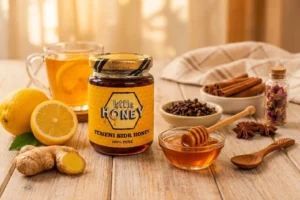
That golden spoonful you stir into your tea is carrying a lot more than sweetness. Honey nutrition facts reveal a genuinely interesting mix of natural sugars, trace vitamins, minerals, enzymes, and antioxidants, all packed into one simple ingredient bees have been perfecting for millions of years.
If you’ve ever wondered what’s actually happening in that spoonful beyond just “sweet,” this is worth a closer look. At Little Honey Straws in Singapore, we love talking about what makes honey special, so let’s break it down together.
What’s Actually Inside a Spoonful of Honey
A single tablespoon of honey holds around 64 calories, and within that small amount sits a genuinely diverse mix of natural compounds. Beyond sugar, honey carries trace amounts of vitamins, minerals, amino acids, enzymes, and antioxidants, a little bundle of nature’s work that sugar simply can’t offer.
It’s worth pausing on that for a moment; a single spoonful contains dozens of naturally occurring compounds working together. Bees don’t just collect nectar and store it, they actually process it in ways that create this genuinely unique nutritional profile, something no factory could replicate from scratch.
This is really what makes that spoonful worth exploring in the first place. It’s not just sweetness in a jar; it’s a genuinely complex natural product with a lot going on beneath the surface.
The Natural Sugars in Honey
Fructose and Glucose: Nature’s Own Blend
Honey’s sweetness comes mainly from a natural blend of fructose and glucose, usually leaning a bit more toward fructose. This particular ratio is part of why honey often tastes sweeter than table sugar, even in smaller amounts.
Why This Blend Feels Different From Refined Sugar
Because of this natural sugar blend, some people find honey’s sweetness feels a little different from refined white sugar, though both are sugars and affect the body in broadly similar ways when it comes to blood glucose. It’s a lovely reason why honey has earned its place as a favorite natural sweetener for so many households, even if it’s not a fundamentally different sugar source nutritionally.
Vitamins and Minerals Honey Brings Along
Trace Minerals Worth Knowing About
Honey contains small amounts of minerals like calcium, iron, zinc, potassium, and magnesium. These amounts are modest, but they’re a nice little bonus you simply won’t find in a spoonful of sugar.
A Small Boost of B Vitamins
Honey also carries trace levels of B vitamins, including riboflavin and niacin. Again, the quantities are small, but every bit adds a little something extra to what would otherwise be an empty sweetener.
A Gentle Source of Antioxidant Support
Beyond vitamins and minerals, honey’s natural composition includes small amounts of amino acids too, the building blocks your body uses for all sorts of everyday functions.
Honey’s Natural Enzymes and Antioxidants
Natural Enzymes Found in Honey
Raw honey naturally contains enzymes like invertase and diastase, which honeybees add during honey production to help convert nectar into honey. These enzymes are part of what makes raw honey a genuinely interesting natural substance, though their specific impact on human digestion isn’t something honey should be relied on for.
Antioxidants That Do Good Work
Honey is home to antioxidants like flavonoids and phenolic compounds, natural substances that help your body manage everyday oxidative stress. This antioxidant content is one of the most talked-about parts of honey, and for good reason.
Honey Nutrition Facts at a Glance
Here’s a simple breakdown of what one tablespoon (about 21g) of honey typically contains, based on standard nutrition data for honey.
Core Nutrition Facts
| Nutrient |
Amount per Tablespoon |
% Daily Value |
| Calories |
About 64 |
3% |
| Total Carbohydrates |
About 17g |
6% |
| Total Sugars |
About 16g |
N/A |
| Protein |
0g |
0% |
| Fat |
0g |
0% |
| Sodium |
0-1mg |
0% |
Naturally Occurring Compounds (Trace Amounts)
These compounds appear in small, naturally occurring amounts; they’re part of what makes honey more than just a simple sugar, even though the quantities are modest.
| Compound |
Present In |
Typical Amount |
| Antioxidants |
Flavonoids, phenolic compounds |
Trace varies by honey type |
| Enzymes |
Invertase, diastase |
Present only in raw, unprocessed honey |
| Trace Minerals |
Calcium, iron, zinc, potassium |
Very small amounts |
| B Vitamins |
Riboflavin, niacin |
Trace levels only |
These figures give a clearer, more complete picture of what’s actually in a spoonful, both the core honey nutrition facts and the smaller, naturally occurring compounds that come along with it.
Common Honey Myths, Softly Explained
A few ideas about honey tend to float around, so let’s gently clear a few things up in the friendliest way possible.
“Honey Is Just Sugar”
There’s some truth here: honey is indeed a sugar, and nutritionally, it’s still primarily made up of natural sugars just like table sugar. That said, honey does carry small amounts of antioxidants, enzymes, and trace nutrients that refined sugar simply doesn’t have, so while it’s not a fundamentally different sugar, it does bring a bit more along with it.
“All Honey Is the Same”
Not quite. Different honey varieties and different levels of processing actually change what’s inside that jar quite a bit. Raw, pure honey tends to hold onto more of its natural goodness than heavily processed versions.
“Honey Never Goes Bad”
This one’s mostly true. Thanks to its low moisture content and natural acidity, pure honey can last a remarkably long time when stored properly.
How Honey Compares to Other Sweeteners
Compared to refined white sugar, honey brings along antioxidants, trace vitamins, and enzymes, things sugar simply doesn’t have. Compared to artificial sweeteners, honey offers a naturally sourced option with a longer history of everyday use.
None of this means honey is calorie-free or something to use without any thought; it’s still a sweetener and works best in reasonable amounts. But among sweetening options, honey brings a genuinely appealing package of natural extras along for the ride.
Maple syrup and agave nectar are two other natural sweeteners people often compare to honey. Maple syrup carries its own set of minerals, particularly manganese and zinc, while agave tends to be higher in fructose and lower in the antioxidant department compared to honey. Each has its own charm, but honey’s particular blend of enzymes, antioxidants, and trace nutrients remains genuinely hard to match.
Why Does the Type of Honey You Choose Matter?
Not all honey is created equal, and the level of processing it goes through changes what actually ends up in your jar. Choosing raw, pure honey means holding onto more of the natural compounds we’ve talked about throughout this guide.
Raw Honey Keeps More of the Good Stuff
Raw honey, minimally processed and gently handled, holds onto more of its natural enzymes and antioxidants compared to heavily filtered, heated varieties.
Our Pure Sidr Honey Difference
At Little Honey Straws, we focus on pure Sidr honey, sourced directly from Sidr trees in Yemen and Kashmir. Because it isn’t heavily processed, it’s reasonable to expect it retains more of the naturally occurring compounds discussed in this guide, antioxidants, enzymes, and trace nutrients, compared to a heavily filtered, processed alternative.
Where to Get Pure Sidr Honey in Singapore
If you’re in Singapore and want honey that genuinely reflects everything we’ve talked about, sourcing pure honey makes a real difference. A lot of what’s labeled honey locally has been processed well past the point of offering much of its natural goodness.
Little Honey Straws sources pure Sidr honey directly, with nothing added and nothing diluted along the way. Whether you’re after Yemeni Sidr, Kashmiri Sidr, or Sidr Malaki, each jar is meant to bring you honey the way nature intended. We deliver across Singapore, so keeping genuinely pure honey in your kitchen is simple and easy.
Final Thoughts
Honey nutrition facts paint a lovely picture of a simple ingredient doing a lot more than most people realize. From natural sugars to trace vitamins, enzymes, and antioxidants, that spoonful of honey is a genuinely wholesome little package.
If you want honey that truly delivers on all of this, Little Honey Straws offers pure Sidr honey right here in Singapore. Contact us or call us at +65 8651 2712; we’d love to help you find the right one for your kitchen.
FAQs
- Is honey healthier than sugar?
Honey and table sugar are both sources of sugar, so neither should be considered a free pass nutritionally. Honey does contain small amounts of naturally occurring antioxidants, minerals, and other compounds that refined sugar does not.
- How many calories are in a spoonful of honey?
A tablespoon of honey has about 64 calories, along with a small bundle of natural nutrients.
- Does honey contain vitamins?
Yes, honey carries trace amounts of B vitamins like riboflavin and niacin, along with small amounts of minerals.
- Why does raw honey have more nutrients than processed honey?
Raw honey isn’t heavily filtered or heated, so it retains more of its natural enzymes and antioxidants.
- Is it true that honey never expires?
Pure honey, stored properly, can last an incredibly long time thanks to its low moisture content and natural acidity.