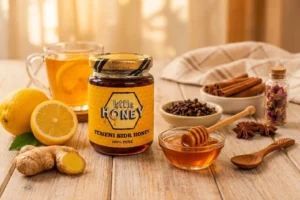
September marks National Honey Month, a time to step back and appreciate one of the most remarkable things nature has ever given us. Long before refined sugars and artificial syrups filled supermarket shelves, there was honey, pure, raw, and shaped entirely by bees rather than a factory.
Originally a United States observance, National Honey Month has grown into something honey lovers everywhere quietly join in on, wherever they happen to be, Singapore included. At Little Honey Straws in Singapore, we’ve always thought honey deserves its own month, so let’s celebrate it properly.
What Is National Honey Month, and Why Does It Matter
National Honey Month began in the United States in 1989, observed every September to recognize honey, beekeepers, and the pollinators behind it all. September is also a meaningful time of year for beekeepers themselves, since it’s when many hives are winding down after a season of hard work, making it a fitting month to pause and appreciate the result of all that labor.
While it isn’t an official observance here in Singapore, there’s nothing stopping honey lovers anywhere from joining in. A month dedicated to something as genuinely wonderful as honey is worth celebrating no matter where you live.
The History of This Honey Celebration
Honey has a history that stretches back far longer than most foods we eat today. Fossil evidence of honey dates back roughly 150 million years, and humans have been harvesting it for thousands of years, long before written history even began.
This annual observance, in its modern form, was created to shine a light on the people and pollinators still keeping that tradition alive: the beekeepers, the honey producers, and, of course, the bees themselves.
The Magic Behind How Honey Is Made
It’s genuinely remarkable when you think about what goes into a single jar of honey. It takes roughly two million flower visits for honeybees to produce just half a kilogram of honey. Along the way, bees add natural enzymes that help convert nectar into honey, while also reducing its moisture content to a point where it can naturally last for an incredibly long time.
A single beehive works as a remarkably coordinated system, with worker bees traveling up to several kilometers from the hive in search of good nectar sources, then returning to pass that nectar along to other bees inside. It’s a genuinely collaborative process, involving thousands of bees working together over the course of a single season to produce what eventually becomes a jar of honey.
Not all honey ends up the same, though. Heavily processed, pasteurized blends found on many supermarket shelves lose a fair amount of what makes raw honey worth seeking out in the first place, while raw, minimally processed varieties tend to retain more of their natural character.
Meet the Sidr Tree: A Different Kind of Honey
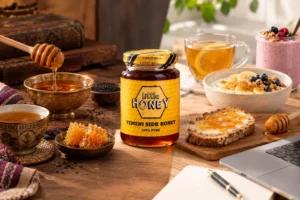
At Little Honey Straws, our story starts with the Sidr tree, also known as Ziziphus Spina Christi, found in the mountainous regions of Do’an, Yemen, and the valleys of Kashmir. Sometimes called the “Manuka of the East,” Sidr honey has built a reputation over generations as a genuinely special variety, valued in traditional wellness practices across the Middle East and South Asia.
This isn’t honey mass-produced from a mix of random flowers; it comes specifically from bees foraging on Sidr blossoms, which gives it a distinct flavor and character you won’t find in a standard supermarket jar. Beekeepers in these regions have passed down the knowledge of harvesting Sidr honey through generations, often timing their work around the tree’s short flowering season each year.
Fun Facts About Honey You Might Not Know
- A single bee produces only about a twelfth of a teaspoon of honey in its entire lifetime
- Honey never truly spoils when stored properly; some archaeological digs have found edible honey thousands of years old
- Bees communicate the location of good nectar sources through a movement known as the “waggle dance”
- Different honey varieties can taste noticeably different depending on which flowers the bees foraged from
- A healthy beehive can produce anywhere from a few kilos to well over 50 kilos of honey a year, depending on conditions
Simple Ways to Celebrate This Month
- Swap your usual sugar for honey in your tea or coffee for the month
- Try a honey variety you’ve never had before, like Sidr honey if you’re new to it
- Gift a jar of honey to a friend, neighbor, or coworker
- Experiment with a honey marinade or glaze in your cooking
- Share a favorite honey recipe or memory with family
- Learn a little more about where your honey actually comes from, and support beekeepers who harvest it with care
Quick Facts at a Glance
| Fact |
Detail |
| Observed |
Every September |
| Origin |
United States, since 1989 |
| Focus |
Honey, beekeepers, and pollinators |
| Global reach |
Not official everywhere, but embraced by honey lovers worldwide |
| Fossil evidence of honey |
Roughly 150 million years old |
Celebrating With Convenience: Honey for Busy Lives
Rich history aside, we also know that managing a sticky jar while rushing through a busy day in Singapore isn’t always practical. That’s part of why we packed our premium Yemeni and Kashmiri Sidr honey into sleek, mess-free honey straws and tearable sachets, making it easy to bring a bit of real honey with you wherever you go.
Whether you’re dropping a straw into a lunchbox, keeping a pack of Sidr Minis at your desk, or tearing open a sachet on the go, celebrating this month doesn’t have to mean managing a jar and a spoon.
Our Sidr Honey Collection
This month is a good excuse to explore our range a little further. Our Yemeni Sidr honey brings a rich, deep flavor from the Do’an region; our Kashmiri Sidr honey offers something milder from the Himalayas; and our Sidr Malaki delivers a bold, intense character for those who love a stronger taste.
Each variety reflects the same commitment, honey that’s minimally processed and genuinely sourced from where we say it’s from. If you’ve only ever tried one type of Sidr honey, this month is a good opportunity to compare them side by side and see which one fits your taste best. Many of our customers end up keeping more than one variety on hand, using a milder one for daily tea and a bolder one for cooking or gifting.
Where to Get Pure Sidr Honey in Singapore
If you’re in Singapore and want to celebrate with something worth celebrating, Little Honey Straws offers pure Sidr honey sourced directly from Yemen, Kashmir, and Pakistan’s KPK region. We deliver across Singapore, so treating yourself, or someone else, to real honey this month is simple. Every purchase also earns you Little Honey Rewards points, which you can redeem toward future orders.
Final Thoughts
National Honey Month is a lovely reminder of just how remarkable honey really is, a natural product shaped by bees, tradition, and time, long before it ever reaches a jar. Whether you’re new to Sidr honey or already a fan, this is a great month to explore it further, try something new, and appreciate the work that goes into every jar.
If you want honey worth celebrating with, Little Honey Straws offers pure Sidr honey right here in Singapore. Contact us or call us at +65 8651 2712; we’re happy to help.
FAQs
- Is National Honey Month celebrated worldwide?
It began as a United States observance, though honey lovers in other countries, including Singapore, often join in informally.
- Why is September chosen for National Honey Month?
September is when many beekeepers wrap up their harvesting season, making it a fitting time to recognize their work.
- What’s a simple way to celebrate at home?
Swapping sugar for honey in your tea or coffee, or trying a new honey variety, is an easy way to join in.
- Does honey really never expire?
Pure honey, stored properly, can last an extremely long time thanks to its low moisture content and natural acidity.
- What makes Sidr honey different from regular honey?
Sidr honey comes specifically from bees foraging on Sidr tree blossoms, giving it a distinct flavor not found in honey made from a mix of common flowers.