Walk down any supermarket aisle, and you’ll find rows of honey that all look pretty similar, golden, smooth, sitting in a squeeze bottle or jar. But raw vs processed honey isn’t just a labeling difference; it’s actually two very different products once you look past the packaging.
If you’ve ever wondered why some honey costs more, tastes different, or gets talked about like it’s some kind of superfood, it comes down to how it’s made. At Little Honey Straws in Singapore, we get asked about this constantly, so let’s break down exactly what separates the two and which one actually delivers for your health.
What’s the Real Difference Between Raw and Processed Honey?
Raw honey is honey pretty much straight from the hive, minimally filtered, never heated to high temperatures, and left with all its natural compounds intact. Processed honey, on the other hand, goes through heavy filtering and pasteurization, heating it to high temperatures to make it smoother, clearer, and shelf-stable for longer.
That processing step is exactly where the difference really starts. What comes out the other end still looks like honey, but a lot of what made it worth eating in the first place has been reduced along the way.
How Processing Changes Honey
Understanding what actually happens during processing makes it easier to see why raw honey keeps getting recommended over the processed alternative.
Heat Reduces Natural Enzymes
Raw honey contains enzymes like invertase and diastase, which may assist digestion. High heat processing reduces a large portion of these enzymes, leaving behind something that resembles refined sugar syrup more closely than raw honey does.
Filtering Removes Pollen and Nutrients
Heavy filtration strips out pollen, propolis, and trace minerals naturally present in raw honey. These are part of what gives raw honey its reputation for supporting immunity and overall wellness.
Antioxidant Levels Drop
Pure Raw honey is rich in antioxidants like flavonoids and phenolic compounds. Processing reduces these levels considerably, since heat breaks down many of the compounds tied to honey’s anti-inflammatory reputation.
Raw vs Processed Honey: Side by Side
This side-by-side raw vs processed honey comparison makes the trade-off pretty clear. Processed honey wins on shelf appeal and consistency, while raw honey tends to retain more of the natural compounds many people look for, though results and preferences can vary from person to person.
| Factor |
Raw Honey |
Processed Honey |
| Natural enzymes |
Fully intact |
Mostly destroyed by heat |
| Antioxidants |
High |
Significantly reduced |
| Pollen and propolis |
Present |
Filtered out |
| Texture over time |
May crystallize naturally |
Stays smooth, artificially |
| Nutritional value |
Closer to what bees produced |
Closer to sugar syrup |
| Shelf appeal |
Can look cloudy or thick |
Clear and consistent |
Health Benefits of Raw Honey
Since raw honey keeps its natural compounds intact, it may bring more to the table than just sweetness.
- May support digestion through natural enzymes that assist in breaking down food
- Contains antioxidants that may help reduce oxidative stress in the body
- May support immune function thanks to trace pollen and antibacterial compounds
- May have a gentler impact on blood sugar compared to refined sugar, though it still contains natural sugars and should be used in moderation
- Retains a richer, more complex flavor that reflects where it was actually sourced from
This is general information based on commonly cited nutrition research, not medical advice. If you’re managing a specific health condition, it’s worth checking with a doctor before making changes to your diet.
How Processed Honey Compares
Processed honey isn’t dangerous, but it does lose a fair amount of what makes honey nutritionally interesting in the first place. Heavy heating and filtering leave it looking consistent on the shelf, though nutritionally it ends up closer to a sugar syrup than the more complex, natural substance raw honey tends to be.
If you’re buying honey purely to sweeten something, processed honey might work fine. But if you’re hoping for any of the wellness qualities people associate with honey, a processed bottle generally offers less to work with.
How to Tell If Your Honey Is Actually Raw
A few simple checks can help you spot the difference before you buy.
- Check the label for words like “raw,” “unfiltered,” or “unpasteurized,” since plain “honey” often means processed
- Look at the texture. Raw honey often crystallizes over time, which is actually a good sign, not a defect
- Compare price, genuinely raw honey usually costs more due to limited processing and sourcing
- Read the ingredient list. Raw honey should only ever list one ingredient: honey
Raw Honey and Cooking: Does Heating It at Home Ruin the Benefits
A common question people ask is whether cooking with raw honey at home undoes all these benefits the same way commercial processing does. The short answer is, it depends on the heat and how long it’s exposed.
A drizzle of raw honey stirred into warm tea or oatmeal isn’t going to strip away much; the exposure is brief, and the temperature isn’t extreme enough to destroy everything. But baking with honey at high oven temperatures for an extended time will break down a good portion of the natural enzymes, similar to what happens during commercial processing.
If you’re using honey purely for flavor in a recipe, this doesn’t matter much. But if you’re specifically after the enzymes, antioxidants, and other qualities raw honey offers, it’s better to add it after cooking, once the food has cooled slightly, rather than baking it in from the start.
Common Myths About Raw and Processed Honey
A few misconceptions tend to follow this topic around, so it’s worth clearing them up.
- “All honey is basically the same.” Not true. The level of processing changes the nutritional profile significantly, even though both start as honey from bees.
- “Crystallized honey has gone bad.” Also false. Crystallization is a natural sign of raw, unprocessed honey and doesn’t affect safety or quality.
- “Processed honey is always fake.” Not quite accurate either. Processed honey is still real honey; it’s just been altered in ways that reduce some of its natural qualities.
- “Raw honey is unsafe because it’s unfiltered.” Raw honey undergoes minimal filtering to remove debris, but this doesn’t make it unsafe; it just means it retains more of its natural character.
Our Raw Honey Range at Little Honey Straws
At Little Honey Straws, everything we sell stays true to what raw honey is supposed to be, nothing heated to death, nothing stripped out along the way.
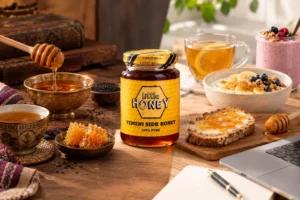
Our Yemeni Sidr Honey Sachets bring pure, raw Yemeni Sidr honey in a convenient, travel-friendly format, perfect for anyone who wants real honey without a jar taking up space. If you prefer something a bit milder, our Kashmiri Sidr Honey offers a gentler, Himalayan-sourced alternative that’s just as raw and just as pure. And for those who want something bolder, our Sidr Malaki delivers a richer, more intense flavor while staying completely unprocessed.
Every jar and every straw we sell reflect the same standard: raw, natural, and never stripped down for shelf appeal.
Where to Buy Raw Honey in Singapore?
If you’re in Singapore and specifically looking for raw honey rather than a processed, syrupy alternative, sourcing matters more than most people realize. A lot of what’s labeled honey on local shelves has been filtered and heated well past the point of offering much natural benefit.
Little Honey Straws sources raw Sidr honey directly, with nothing diluted and nothing stripped away in the process. Each product in our range is meant to reflect what raw honey actually is, not a processed imitation of it. We deliver across Singapore, so keeping genuine raw honey in your kitchen is simple.
Final Thoughts
When it comes to raw vs processed honey, the difference comes down mainly to what survives the processing step. Raw honey tends to retain more of its natural enzymes, antioxidants, and nutrients, while processed honey trades some of that away in exchange for a longer shelf life and a more consistent look on the shelf.
If you want honey that actually delivers, not just something sweet, Little Honey Straws offers raw, pure Sidr honey right here in Singapore. Contact us or call us at +65 8651 2712; we’re happy to help you find the right one for your routine.
FAQs
- Is raw honey actually better than processed honey?
In most cases, yes, for people specifically looking for the natural enzymes, antioxidants, and nutrients that processing tends to reduce.
- Why does raw honey crystallize?
Crystallization is a natural process for raw, unprocessed honey and doesn’t mean it’s gone bad. Processed honey is often heated specifically to prevent this from happening.
- Is processed honey unsafe to eat?
No, it’s safe, just less nutritionally rich. It ends up closer to a sugar syrup than the more complex natural product that raw honey tends to be.
- How can I tell if honey is raw just by looking at it?
Raw honey may look cloudy, thicker, or crystallized over time, while processed honey stays smooth and clear consistently.
- Does raw honey cost more than processed honey?
Generally, yes, since raw honey involves less processing and often more careful sourcing, which raises the cost compared to mass-produced processed honey.