Bees make honey by collecting nectar from flowers, adding enzymes to it, drying it with their wings, and sealing it in wax cells. That’s how bees make honey in one sentence. The full process has more steps than most people expect, and no single bee does it alone.
Honey isn’t made for us. It’s the colony’s food supply, and the jar on your shelf is the extra the bees didn’t need. Between the flower and that jar, the nectar goes through several handoffs, a lot of wing fanning, and a careful wax seal.
This guide walks through each step in plain English, clears up the “bee vomit” myth, and explains which bees actually make honey. It also follows the honey from hive to jar and covers what to check when you buy it, whether you shop at Little Honey or anywhere else.
Bees make honey so the colony can survive winter and any stretch when flowers aren’t blooming. A hive can hold tens of thousands of bees, and they all need to eat even when there’s no nectar outside. Honey solves that problem. It’s stored energy that keeps for months.
Bees eat it to fuel their flight muscles, and in cold weather they burn it to keep the hive warm. One source says a typical hive needs about 60 pounds (27 kg) of honey to get through winter. Strong colonies often make more than they need, and in the US, a hive produces about 55 pounds of surplus honey in an average year. That surplus is what beekeepers can take.
Honey-making isn’t one bee’s job. It’s a relay, and every worker has a part. Here’s how bees make honey, one handoff at a time.
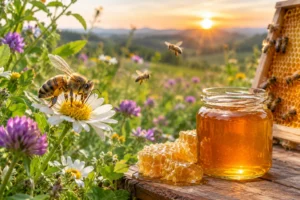
Nectar is the sugary liquid flowers make to attract pollinators, and it’s mostly water. A forager bee sucks it up through her proboscis, a thin, straw-like tongue, and stores it in a pouch called the honey stomach. That pouch is separate from the stomach she uses to digest her own food.
A forager can fly up to 5 km to find good flowers and may visit 50 to 100 of them on one trip. When the honey stomach is full, she heads home.
On the way back, enzymes from the bee’s body mix into the nectar. The main one, invertase, breaks sucrose down into glucose and fructose, and other enzymes make the nectar more acidic, which helps kill bacteria. Glucose and fructose are the main natural sugars in honey, so this step is where nectar starts becoming something new.
Back at the hive, the forager passes the nectar to a house bee, mouth to mouth. That bee passes it on again, and the nectar keeps changing hands. Each handoff adds more enzymes and removes a little water. Finally, the bees place small drops of it into the cells of the honeycomb.
At this point, the nectar is still too wet to keep. Bees fan it with their wings to speed up evaporation, and many bees take turns doing it. Nectar starts at around 75% water, and it has to drop to about 18% before it counts as honey. That’s dry enough that mould and bacteria can’t grow.
Once the water level is right, the bees cover each cell with a thin wax lid. They make the wax themselves, from glands on their bodies, and shape it with their jaws. The cap keeps air and moisture out, so the honey stays stable until the colony needs it. Fully capped comb is also what beekeepers look for when choosing which frames are ready to harvest.
No. It’s a popular joke, but it isn’t accurate. The honey stomach is a storage pouch, completely separate from the stomach where a bee digests food. Nectar isn’t digested in there.
Bees do bring the nectar back up to pass it to the next worker, and that’s part of how bees make honey. But moving nectar out of a storage pouch isn’t the same as vomiting digested food. What really turns nectar into honey is the enzymes and the drying. By the time it’s sealed in wax, it’s a different substance.
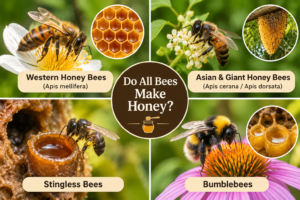
No. Out of more than 20,000 bee species, only a handful make honey, and domesticated honey bees are the main source. Here’s how the main groups compare.
This is the species behind most of the honey you buy. They’re kept in managed hives around the world, and a single colony can store far more honey than it needs.
Asian honey bees (Apis cerana) and giant honey bees (Apis dorsata) also make honey. Giant honey bees usually build one large open comb, often high on a tree or cliff, and the honey is collected from the wild.
These tropical bees store honey in small pots made of wax and resin, not in flat honeycomb. They make much less honey than honey bees. It’s usually runnier and has a tangy taste.
Bumblebees store a little nectar in wax pots, but only enough to get the colony through a few bad days. They don’t make a surplus, so there’s nothing for people to harvest.
A single worker bee makes only about 1/12 of a teaspoon of honey in her lifetime, so it takes around 12 bees to fill one teaspoon. A summer worker lives for roughly six weeks, and most of that time goes to work.
How long it takes to turn nectar into honey depends on the weather, how watery the nectar is, and how many bees are helping. It can take a few days from the first handoff to the wax seal. Warm, dry weather speeds things up, and rainy spells slow things down.
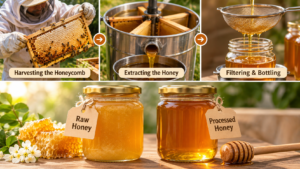
Now that you know how bees make honey, here’s what happens when a beekeeper takes the surplus.
Beekeepers collect the honeycomb frames and scrape off the wax cap that bees use to seal each cell. They leave enough honey behind for the colony. The frames are then spun in an extractor, which flings the honey out without destroying the comb. The empty comb goes back into the hive, so the bees don’t have to build it again from scratch.
The honey is strained through a mesh to catch bits of wax and other particles. Some producers warm it gently so it flows more easily. After that, it’s poured into jars, bottles, or single-serve packs.
You’ll see both words on labels. There’s no single rule for what counts as “raw” everywhere, so the general difference is worth knowing.
| Feature | Raw honey | Processed honey |
| Heating | Little or no heat | Heated, often pasteurised |
| Filtering | Strained, can look cloudy | Finely filtered, usually clear |
| Texture over time | Crystallises sooner | Stays liquid longer |
| Closeness to hive honey | Closer | Less close |
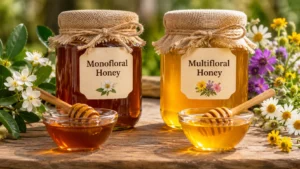
Colour and flavour come from the flowers the bees visited, which is why Sidr Honey vs. Other Honey Varieties: What Sets It Apart? can look and taste so different.
Honey sealed in wax can last a very long time, and understanding how bees make honey also explains why. Three things work together:
That “never” comes with conditions, though. If water gets in, from a wet spoon or a loose lid, honey can ferment. Crystallising isn’t spoiling. It’s just sugars forming crystals, and a few minutes in a bowl of warm water turns it liquid again. Keep the lid tight and store the jar at room temperature.
A few quick checks make buying easier, whether you’re picking a jar or a pack of sachets:
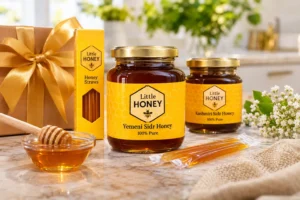
Little Honey is a Singapore-based honey brand that offers Kashmiri and Yemeni Sidr honey, which comes from the nectar of sidr trees. If a full jar is more than you need, honey sachets are an easy way to carry a single serving.
Bees collect nectar, add enzymes, pass it from bee to bee, fan off the extra water, and seal it in wax. Knowing how bees make honey makes each spoonful feel earned, and it helps you spot a good jar when you see one.
If you’re looking for good honey in Singapore, you can explore the range at Little Honey.
Contact details
📍 Address: 807A Chai Chee Rd, Singapore 461807
📞 Phone: +65 8651 2712
✉️ Email: honeystrawsg@gmail.com


Conversion Rule: 10 Points = $1.00
Conversion Rule: 10 Points = $1.00
Conversion Rule: 10 Points = $1.00
Conversion Rule: 10 Points = $1.00